
Si Dian Jin: Everything You Need to Know for Si Dian Jin in Wedding
2026-06-02
Si Dian Jin: Meaning, Traditions, and Etiquette in Chinese Weddings
Si Dian Jin is one of the most significant traditions in a Chinese wedding, carrying deep cultural meaning and a great deal of family expectation. Whether you are planning a traditional ceremony or a modern celebration, understanding what Si Dian Jin is, when it is given, and how it works helps you navigate the tradition with confidence. Here is everything you need to know.
Source:skjewellery
What Is Si Dian Jin and Why It Matters in Chinese Weddings
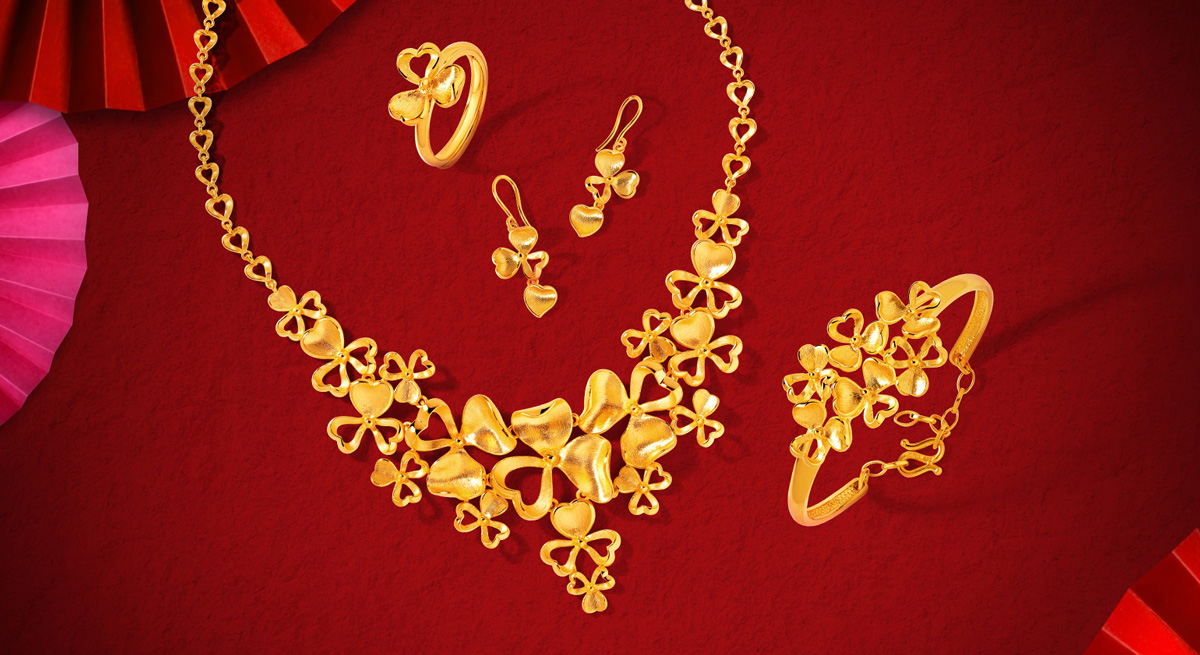
Si Dian Jin, which translates literally to "four touches of gold," refers to a set of four gold jewellery pieces traditionally given to the bride as part of a Chinese wedding. The four pieces typically consist of a necklace, a bracelet, a ring, and a pair of earrings, though variations exist depending on dialect group and family custom.
The gold itself carries significant symbolic weight in Chinese culture. Gold represents prosperity, good fortune, and a stable foundation for the couple's future together. Presenting the bride with Si Dian Jin is the groom's family's way of formally welcoming her into their family and expressing their commitment to her wellbeing.
Beyond the material value, Si Dian Jin represents the union of two families. It is a public gesture of respect and acceptance, and for many families, particularly those with strong Hokkien, Teochew, or Cantonese roots, it remains one of the most important moments in the entire wedding process. Skipping or minimising it without prior discussion can carry unintended meaning, so it is worth approaching with care and consideration.
When to Give Si Dian Jin in the Wedding Timeline
The timing of Si Dian Jin varies depending on the family's dialect group, regional customs, and how traditional the families involved are.
In more traditional practice, Si Dian Jin is presented during the betrothal ceremony, known as Guo Da Li, which takes place weeks or months before the actual wedding day. This is when formal gifts are exchanged between the two families and the marriage is officially acknowledged.
In many modern Singaporean and Malaysian Chinese weddings, Si Dian Jin is presented on the morning of the wedding day itself, typically during the bridal chamber ceremony or when the groom's family formally receives the bride. Some families do both, presenting a portion of the jewellery during Guo Da Li and the remainder on the wedding day.
The key is to align expectations between both families early. What feels like the obvious timing to one family may differ entirely from what the other family expects. Having a straightforward conversation about this during the early stages of wedding planning prevents any awkwardness on the day itself.
See more: Si Dian Jin Etiquette: Dos And Don’ts For The Bride’s Parents
When Is Si Dian Jin Given During the Ceremony?
Within the wedding day itself, Si Dian Jin is typically presented during the groom's procession to the bride's home, a ritual known as Qin Jia. This is one of the most emotionally significant parts of a traditional Chinese wedding morning and is often accompanied by other rituals such as the tea ceremony setup and door games.
The presentation usually takes place in the bridal chamber, with the groom's mother or a senior female relative from the groom's family placing the jewellery on the bride. This moment is considered highly auspicious and is often one of the most photographed parts of the morning proceedings.
In weddings that follow a more streamlined schedule, Si Dian Jin may be presented just before or during the tea ceremony. The important thing is that it happens in a deliberate, acknowledged moment rather than being passed over quietly.
The difference between pre-wedding and wedding-day giving largely comes down to family tradition. Pre-wedding presentation during Guo Da Li is more formal and ceremonial. Wedding-day presentation tends to feel more immediate and emotional, as it happens in the context of the couple coming together on the day itself.
Who Gives Si Dian Jin and Who Receives It?
Si Dian Jin is given by the groom's family to the bride. In practice, it is most commonly presented by the groom's mother, as she represents the matriarch welcoming the bride into the family. In some families, the groom himself places the jewellery on the bride as part of the presentation.
The bride is the primary recipient. The jewellery belongs to her personally, not to the couple jointly, and this distinction matters culturally. Si Dian Jin is a gift to the bride from her new family, and it is hers to keep regardless of what happens in the marriage.
On the bride's side, her parents and close family are present as witnesses to the presentation. In some traditions, the bride's mother may also play a role in the moment, helping to position the jewellery or offering a blessing.
Family expectations around Si Dian Jin can vary considerably. Some families have strong views about the quality, weight, and design of the pieces, while others are more relaxed. It is worth understanding what the bride's family values and expects before making purchases, as this avoids any unintended impressions about the groom's family's sincerity or financial standing.
How Si Dian Jin Is Presented and Used
Si Dian Jin is typically presented in a jewellery box or a decorative tray, sometimes lined with red fabric to signify good luck. The presentation is a deliberate moment, not a casual handover. It is done in front of family witnesses as a formal gesture.
Whether the bride wears the Si Dian Jin on her wedding day depends on the family and the design of the pieces. Some brides wear all four pieces throughout the day as a display of the gift and its significance. Others wear them during specific ritual moments, such as the tea ceremony, and change into different jewellery for the evening banquet. There is no single correct approach, and comfort and practicality are legitimate factors in the decision.
After the wedding, Si Dian Jin is kept by the bride. Many women store the pieces carefully and wear them on significant occasions such as Chinese New Year, family gatherings, or the weddings of the next generation. In some families, Si Dian Jin is eventually passed down as heirloom jewellery, adding another layer of meaning to the original gift.
See more: Why Si Dian Jin Is The Perfect Gift For Special Occasions
Traditional vs Modern Practices of Giving Si Dian Jin
Like many Chinese wedding traditions, Si Dian Jin has evolved alongside changing attitudes towards marriage and cultural identity.
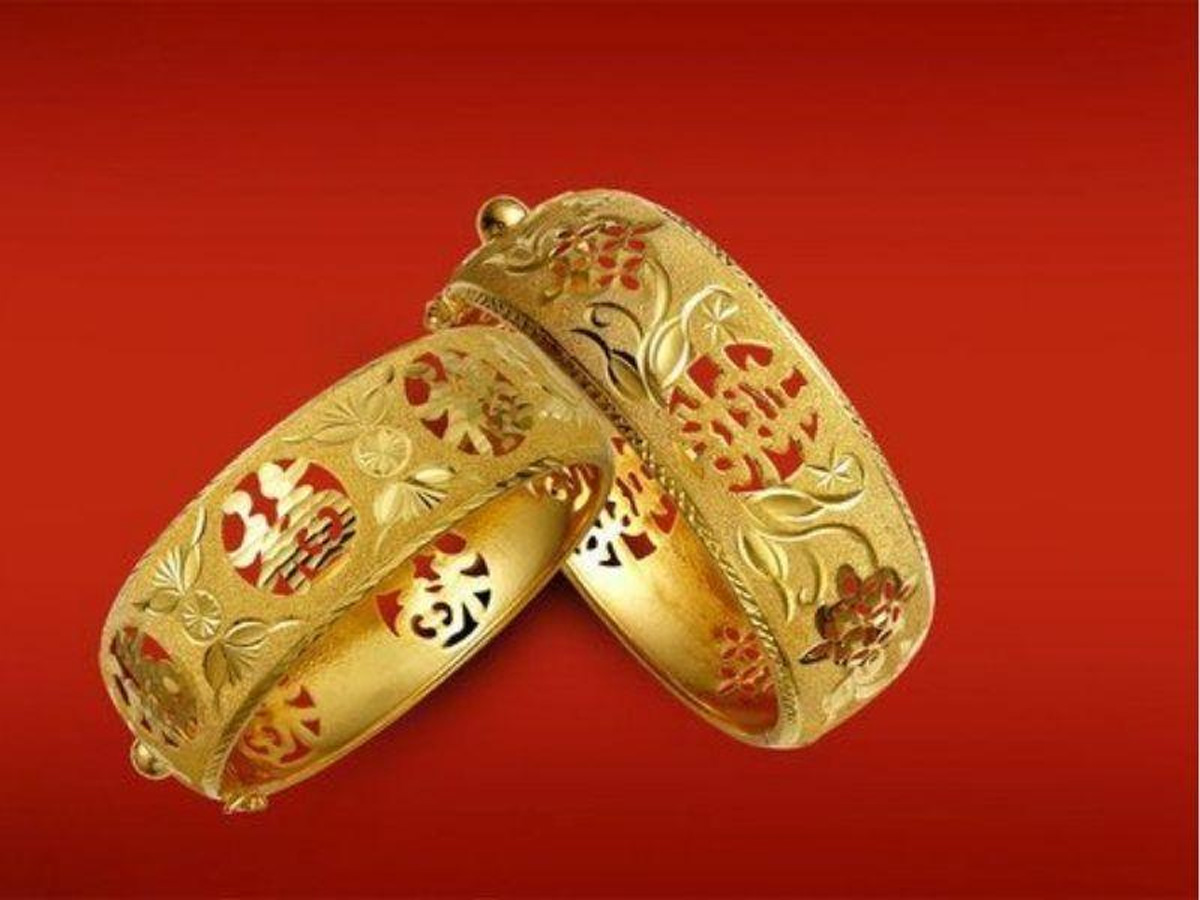
In traditional practice, the four gold pieces were selected according to specific standards of weight and craftsmanship, and the expectation was that they would be substantial enough to reflect the groom's family's respect and financial capability. The designs were often classic and ornate, in keeping with traditional Cantonese, Hokkien, or Teochew aesthetics.
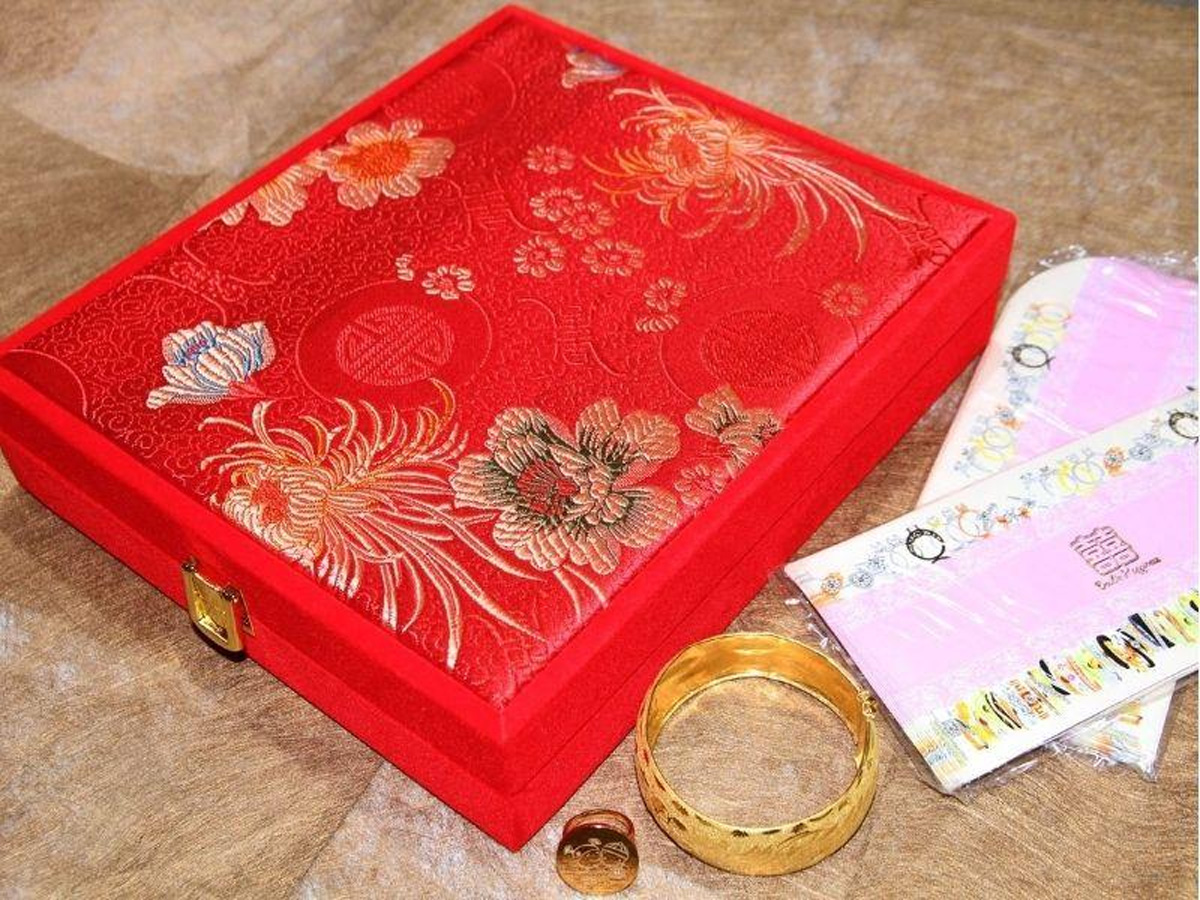
Modern couples and families have introduced more flexibility. Many brides today are involved in choosing or approving the designs of their Si Dian Jin pieces, which means the jewellery is more likely to reflect her personal style and be something she will actually wear. Contemporary designs, white gold, and mixed metal pieces are increasingly common alongside or instead of traditional yellow gold.
Some couples choose to simplify the tradition by selecting two pieces instead of four, or by treating the exchange as a symbolic gesture rather than a formal ceremony. Others skip it entirely, particularly in intercultural marriages or families where the tradition was never practised. These are personal decisions, and what matters most is that both families are aligned and comfortable with whatever is chosen.
See more: Why Si Dian Jin Is A Key Part Of Chinese Weddings
Etiquette Rules for Giving Si Dian Jin
Approaching Si Dian Jin with the right etiquette shows respect for the tradition and for both families involved.
Do discuss expectations early. Before purchasing anything, have an open conversation between both families about what is expected in terms of the number of pieces, the type of gold, and the approximate value. This avoids misunderstandings and ensures the gift lands well.
Do purchase from a reputable jeweller. Many families, particularly older generations, place importance on the quality and authenticity of the gold. Buying from a trusted jeweller and keeping the receipts and certificates is standard practice.
Do not present Si Dian Jin casually. The presentation should be a deliberate moment with family present. Handing over a jewellery bag without ceremony can come across as dismissive of the tradition's significance.
Be sensitive to differing family expectations. If one family is very traditional and the other is more relaxed, find a middle ground that honours the spirit of the tradition without creating unnecessary tension.
As for whether Si Dian Jin is mandatory today, the honest answer is that it depends entirely on the families involved. For many Chinese families in Singapore and Malaysia, it remains an important and expected part of the wedding process. For others, it is one tradition among many that couples are free to adapt or set aside. When in doubt, it is always better to ask than to assume.
Si Dian Jin vs Other Chinese Wedding Gifts
Si Dian Jin is one part of a broader set of Chinese wedding customs involving the exchange of gifts and formal gestures between families. Understanding how it differs from other traditions helps clarify its specific role.
Si Dian Jin vs Guo Da Li: Guo Da Li is the betrothal ceremony in which the groom's family presents a range of gifts to the bride's family, which may include food items, cakes, and cash in red packets. Si Dian Jin is often presented as part of Guo Da Li but is distinct from it. Guo Da Li is about the formal acknowledgement of the marriage between two families. Si Dian Jin is specifically a gift of gold jewellery to the bride herself.
Si Dian Jin vs dowry: The dowry, or Hui Li, refers to gifts that the bride's family returns to the groom's family, often including a portion of the betrothal gifts along with items for the new household. Si Dian Jin moves in one direction only, from the groom's family to the bride, and is not part of the reciprocal exchange.
Understanding these distinctions matters because confusing them can lead to misplaced expectations about who gives what and when. Each tradition has its own meaning, timing, and set of participants.
See more: Does Si Dian Jin Hold Any Meaning In Today’s Society?
Common Mistakes and Misunderstandings About Si Dian Jin
Even well-intentioned families can run into difficulties with Si Dian Jin if certain assumptions go unchecked.
Confusing the timing or ceremony stage is one of the most common issues. Assuming Si Dian Jin is always given during Guo Da Li, or always on the wedding morning, without confirming with both families can lead to an awkward moment where the expectation and reality do not match.
Misinterpreting the cultural meaning is another area where things can go wrong. Si Dian Jin is not simply a gift. It is a formal gesture of welcome and commitment. Treating it as an optional nice-to-have without understanding its significance to the bride's family can cause unintended offence.
Overlooking specific family customs is perhaps the most easily avoided mistake. Different dialect groups have different conventions around Si Dian Jin. A Hokkien family may have different expectations from a Cantonese family. Taking the time to ask and understand the specific customs of both families, rather than assuming a single universal standard applies, goes a long way towards making the tradition a meaningful and positive part of the wedding.
Request a quote from over 450 wedding vendors
Get A Free Quote Now





BOWS | Ultimate All In One Wedding Show

GET THE APP


WE ACCEPT






Copyright © 2026 Citrus Media Pte. Ltd.
Reg No.: 200206092Z. All Rights Reserved