
Modern Love in Singapore: What Marriage Means Today
2026-02-17
Source: @inno__go
Marriage in Singapore has evolved dramatically over the past few decades. Where once it was primarily an institution shaped by duty, family obligation, and traditional expectations, today's couples are redefining what it means to commit to a life partner. Yet in this city-state where old and new exist side by side, modern Singaporean marriages navigate a fascinating tension between honouring heritage and forging individual paths.
What has changed most is not the desire for commitment, but the way it is understood. For many couples today, marriage is no longer a milestone to be reached or a role to be fulfilled, but an intentional partnership, one built on shared values, ongoing negotiation, and a conscious decision about the kind of life they want to create together.
The Shift from Duty to Partnership
Source: Smittenpixels Photography
For previous generations, marriage often followed a predictable script: meet someone suitable (preferably through family or mutual friends), court briefly, marry young, and build a life according to well-established patterns. The emphasis was on stability, compatibility of families, and fulfilling social expectations.
Today's couples approach marriage differently. They're marrying later, with the median age for first marriages now hovering around 30 for men and 29 for women. This delay is not about reluctance or avoidance of commitment but about intentionality. Singaporeans are prioritising personal development, career establishment, and genuine compatibility before making lifelong commitments.
This shift reflects a broader redefinition of marriage in Singapore: from a duty-driven institution to an intentional partnership. Modern marriage in Singapore is increasingly about partnership in the truest sense. Couples view each other as equals who choose to build something together rather than fulfilling predetermined roles. This means shared decision-making about careers, finances, household responsibilities, and even whether to have children. The question isn't "what should we do?" based on tradition, but "what do we want?" based on mutual values and dreams.
Redefining Gender Roles
Perhaps nowhere is the evolution of marriage more visible than in the changing dynamics of gender expectations. Rather than adhering to fixed roles of breadwinner and homemaker, modern Singaporean couples are increasingly approaching marriage as a flexible partnership shaped by practicality, preference, and mutual agreement.
It's increasingly common to see couples where the wife out-earns her husband, or where both partners maintain ambitious careers whilst sharing domestic responsibilities. Some couples choose to have the husband take on more childcare duties if it makes practical or personal sense. Others reject the pressure to have children altogether, focusing instead on building the relationship and life they genuinely want. This flexibility does not signal a weakening of commitment, but a shift toward roles that support the partnership as a whole.
This redefinition doesn't mean tradition has been entirely abandoned. Many couples still incorporate meaningful customs into their weddings and marriages, but now it's a choice rather than an obligation. They select the elements that resonate with their values and politely decline those that don't. Traditions are adapted, combined, or set aside depending on what resonates with the couple, reflecting a move away from prescribed gender roles toward intentional, negotiated arrangements.
The Influence of Individualism
Growing up in an era of global connectivity and diverse perspectives, today's Singaporean couples bring a more individualistic mindset to marriage. This individualism, however, is less about self-interest and more about self-awareness, an understanding of personal needs, boundaries, and values that shape how partners relate to each other. They're less willing to stay in unsatisfying relationships simply because "that's what's done" and more committed to ongoing growth, both individually and as a couple.
This manifests in various ways. Couples are more likely to seek premarital counselling or therapy when challenges arise. They prioritise quality time together despite demanding work schedules. They communicate more openly about expectations, frustrations, and needs rather than suffering in silence. Far from weakening commitment, this approach often requires greater emotional effort and accountability from both partners.
There's also greater acceptance that marriage looks different for different people. Some couples maintain separate bank accounts and financial independence. Others blend their resources completely. Some prefer living with in-laws to save money and maintain family closeness. Others prioritise having their own space, even if it means a smaller flat further from town.
What unites these different arrangements is not uniformity, but a shared understanding that marriage is something to be actively shaped, through choice, dialogue, and ongoing negotiation, rather than passively inherited.
Navigating Family Expectations
Source: Manoj Photography
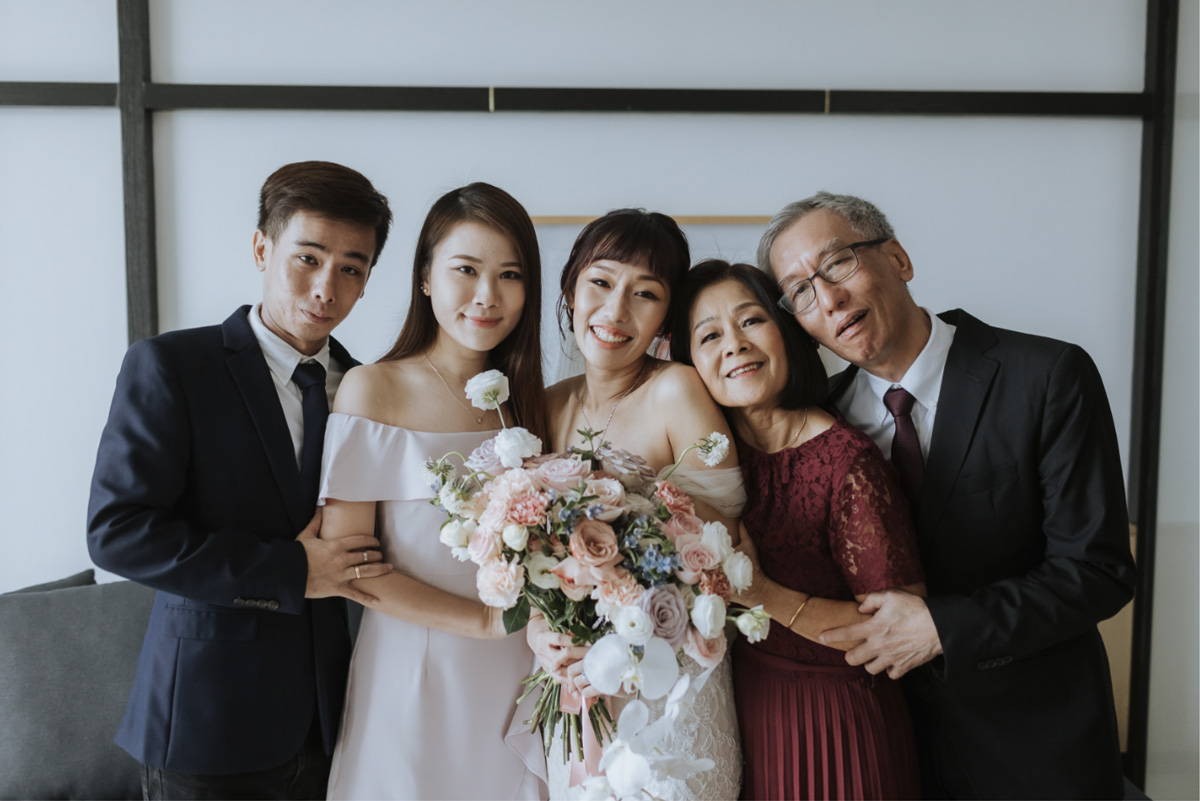
Despite these shifts, family remains central to Singaporean life, creating a unique balancing act for modern couples. Parents who married in a different era sometimes struggle to understand why their children approach marriage differently. This can create tension around everything from wedding planning to decisions about work and children.
For many parents, marriage has traditionally symbolised stability, security, and continuity. For their children, it increasingly represents identity, autonomy, and personal fulfilment. The tension that arises is not a clash between right and wrong, but between life frameworks shaped by different social and economic realities.
The most successful modern couples find ways to honour their families whilst maintaining healthy boundaries. They involve parents in meaningful ways without ceding complete control. They listen to concerns with respect but make final decisions together as a couple. Rather than rejecting family expectations outright, they approach them through negotiation, acknowledging parental intentions while asserting their own shared priorities.
They help older family members understand that different doesn't mean wrong, that love and commitment can be expressed in various forms. By reframing marriage as a partnership grounded in choice rather than obligation, couples are better able to bridge generational divides without compromising their autonomy.
Financial Realities and Practical Considerations
Modern marriage in Singapore also means grappling with significant financial pressures that previous generations faced differently. The cost of housing, even with government subsidies, represents a massive commitment. Many couples delay marriage until they've secured their Build-To-Order flat or saved substantial deposits.
In Singapore, where housing policies, financial stability, and marital status are closely intertwined, marriage is not only a personal decision but a structural one. Access to housing, long-term planning, and economic security are often negotiated alongside emotional readiness.
But there's a pragmatic streak to Singaporean couples that serves them well. They discuss finances openly before marriage, align on spending priorities, and make joint financial plans. Marriage is seen as a practical partnership as much as a romantic one, and there's no shame in acknowledging the economic dimension.
This practicality extends to wedding planning itself. Whilst some couples still opt for elaborate celebrations, there's growing acceptance of simpler, more intimate affairs. The focus increasingly shifts from meeting social expectations to marking the commitment in ways that feel financially and emotionally sustainable for the couple.
What Truly Matters Now
At the heart of modern Singaporean marriage is a fundamental question: what do we want our life together to look like? The answer varies enormously from couple to couple, and that diversity is precisely the point.
For some, marriage means building a family and creating a warm, chaotic home filled with children and grandparents. For others, it's about partnership in adventure, exploring the world together, and supporting each other's ambitions. Some couples find meaning in quiet domesticity, whilst others thrive on social engagement and community involvement.
What unites these varied approaches is not a shared lifestyle, but a shared process of decision-making. Modern marriage in Singapore is increasingly defined by choice, communication, and mutual respect rather than adherence to a single ideal. Couples are less concerned with whether their marriage looks “right” from the outside, and more focused on whether it feels sustainable, supportive, and aligned with their values.
In this sense, marriage has become a form of life design, a flexible framework within which two people decide how they want to live, grow, and relate to the world together. Meaning is no longer inherited by default, but actively created through conversation, compromise, and commitment over time.
Moving Forward Together
Source: Iluminen Singapore
As Singapore continues to evolve, so too will its understanding of marriage. Already we're seeing greater acceptance of diverse relationship timelines, acknowledgment that not everyone wants children, and recognition that love and commitment transcend traditional boundaries. These shifts reflect not a decline in commitment, but a redefinition of what commitment looks like in contemporary life.
The couples marrying today are writing new stories about what partnership means. They're proving that you can honour where you come from whilst creating something uniquely your own. They're showing that marriage can be both deeply personal and connected to community, that tradition and innovation aren't opposites but partners in creating meaningful lives.
In the end, modern marriage in Singapore is about this: two people choosing each other, again and again, whilst building a life that reflects their shared values, dreams, and vision of happiness. In whatever form it takes, that conscious commitment remains at the heart of what marriage means today. That's something worth celebrating.
Request a quote from over 450 wedding vendors
Get A Free Quote Now
Editor's Choice Awards 2026

GET THE APP


WE ACCEPT






Copyright © 2026 Citrus Media Pte. Ltd.
Reg No.: 200206092Z. All Rights Reserved