
15 Stunning Indian Wedding Hairstyles for Every Bride
2026-08-03
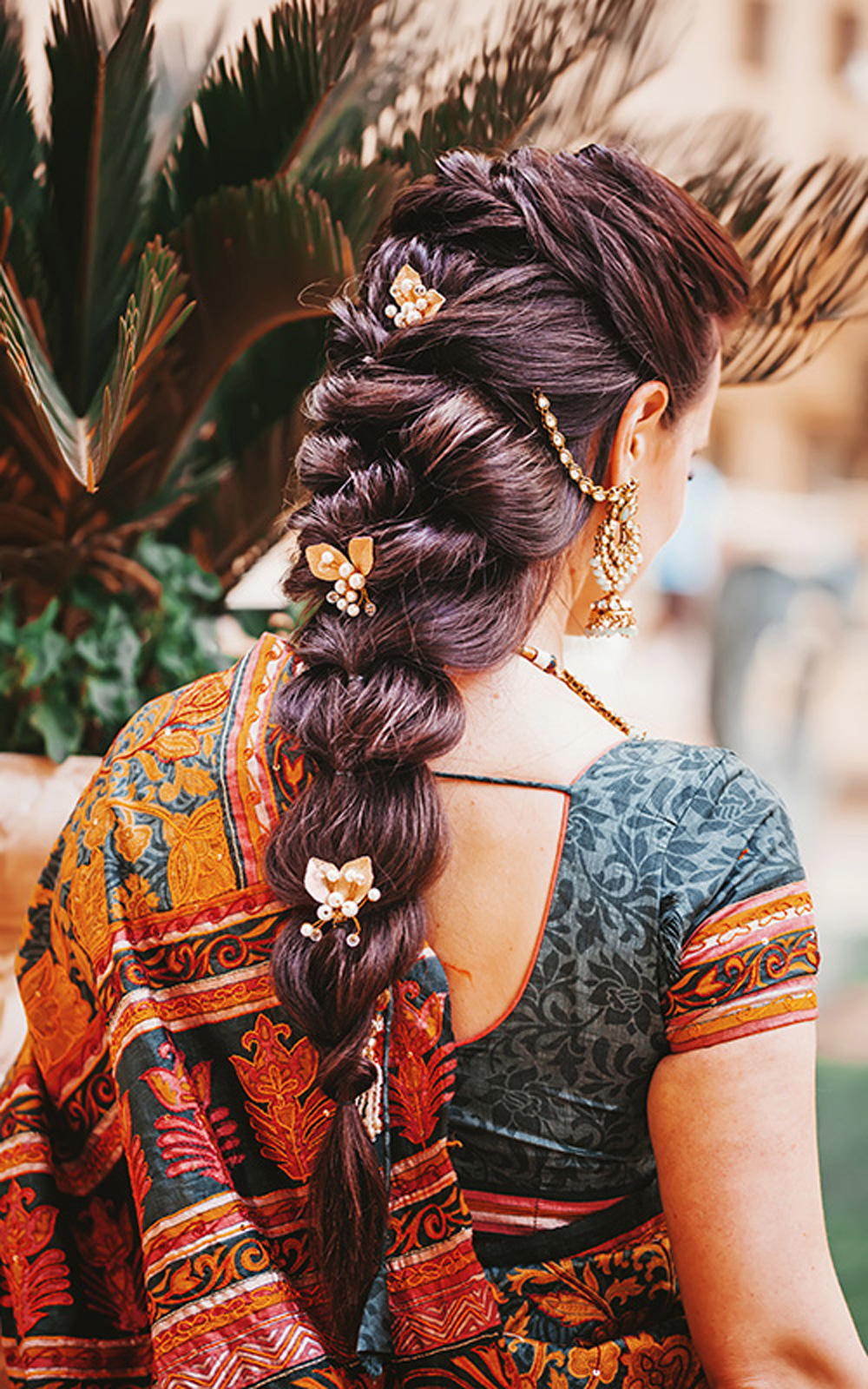
Your wedding hairstyle is the finishing touch that brings your entire bridal look together, and for Indian brides, it carries just as much cultural significance as it does beauty appeal. From the classic low bun adorned with fresh jasmine to a modern, jewel-studded half-up style, Indian bridal hair offers endless ways to express tradition, personality and style.
In Singapore, where Indian weddings often span multiple ceremonies, ranging from a Kerala bridal hair style for a traditional Nair wedding to a glamorous updo for the reception, choosing the right hairstyle for each occasion is part of the fun. This guide covers fifteen gorgeous Indian wedding hairstyles, along with the practical considerations to help you decide what will work best for you.
Source:Weddingforward
How to Choose the Perfect Indian Wedding Hairstyle
Before you fall in love with a particular look on Pinterest, it is worth thinking through a few practical factors that will affect how well a hairstyle actually works for you on the day.
Based on Hair Length
Longer hair offers the most versatility, allowing for elaborate braids, voluminous buns and statement curls. If your hair is shorter or medium length, do not worry, many styles can be adapted with the help of clip-in extensions or by working with what you have for a more relaxed, natural look. A good hairstylist will be able to advise on what is realistic and what may need a little extra help.
Based on Face Shape
Your face shape can guide how much volume or height works in your favour. Rounder faces often benefit from styles with height at the crown or soft waves that elongate the face, while those with longer face shapes may prefer fuller, side-swept styles that add width. Heart-shaped faces tend to suit most styles well, particularly those that draw attention to the eyes and cheekbones.
Based on Wedding Outfit
Your hairstyle should work in harmony with your outfit's neckline and embellishment. A heavily embroidered or high neckline often pairs beautifully with an updo or bun that keeps the neck and shoulders visible, while a more open or draped neckline can carry the weight of loose curls or a half-up style. If your outfit already has a dupatta or veil to manage, your hairstylist will need to factor that into the overall design.
Based on Wedding Ceremony
Different ceremonies call for different levels of formality. A haldi or mehendi function usually calls for something simple, comfortable and durable, since you will be moving around a lot. The main wedding ceremony often calls for a more elaborate style with accessories and embellishments, while the reception is typically where brides go all out with their most glamorous hairstyle of the day.
Traditional and Modern Indian Bridal Hairstyles: What's the Difference?
Source: Anupama Shetty
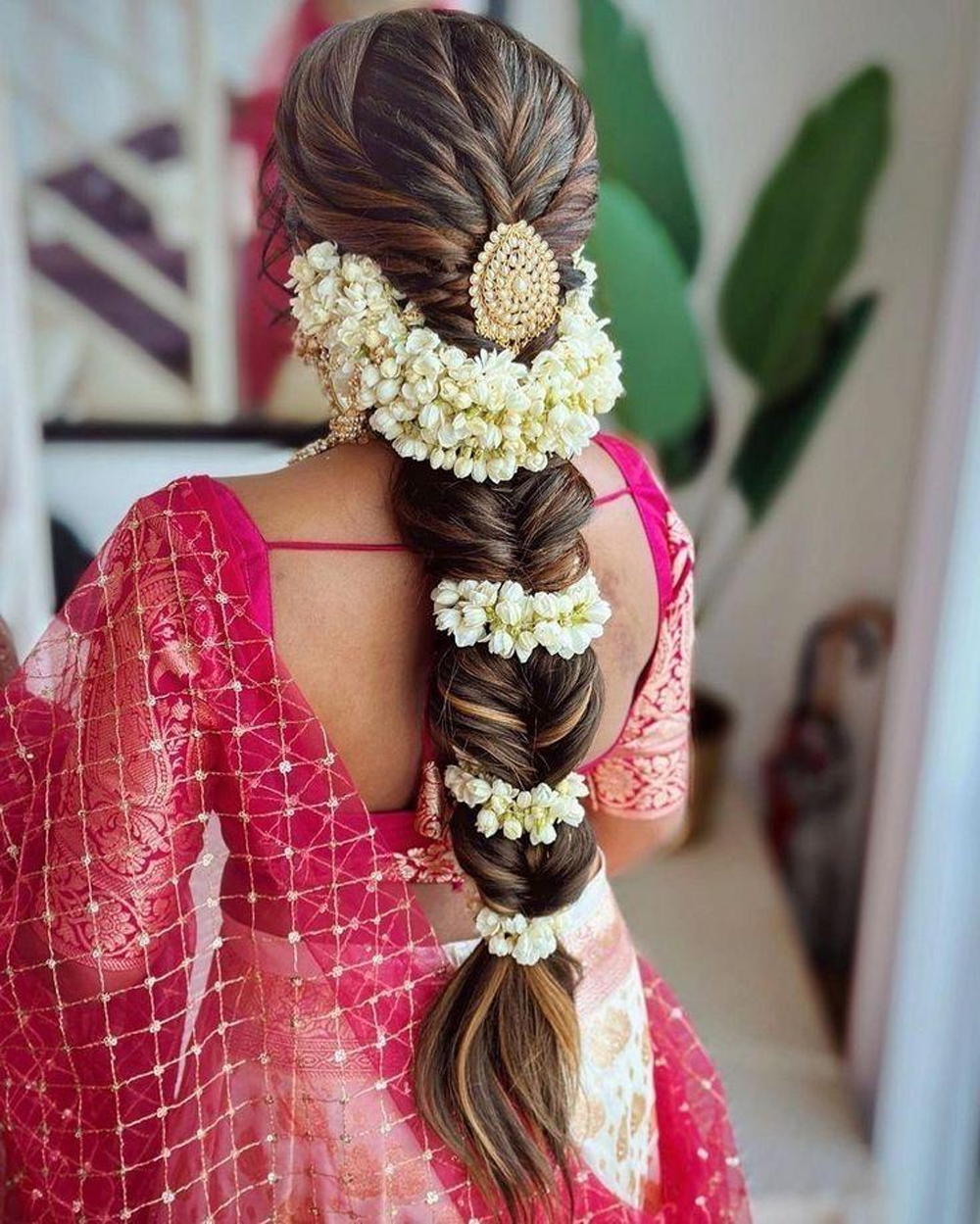
Traditional Indian bridal hairstyles tend to centre around the classic low bun, often elaborately decorated with fresh flowers, gajra or jewelled hairpins, and styled close to the nape of the neck. These styles have deep cultural roots and are often passed down through generations, particularly in South Indian wedding traditions.
Modern Indian bridal hairstyles, on the other hand, draw inspiration from international bridal trends, incorporating loose curls, braids, half-up styles and sleek updos that blend Western techniques with Indian sensibilities. Many brides today choose to combine both, perhaps opting for a traditional bun for the main ceremony and a more contemporary style for the reception. There is no wrong choice, only what feels most true to you.
Indian Bridal Bun Hairstyles
The bun remains one of the most enduring and versatile choices in Indian bridal hair, prized for its elegance and ability to carry heavy accessories with ease.
Traditional Low Bun
Source: NehaMathew
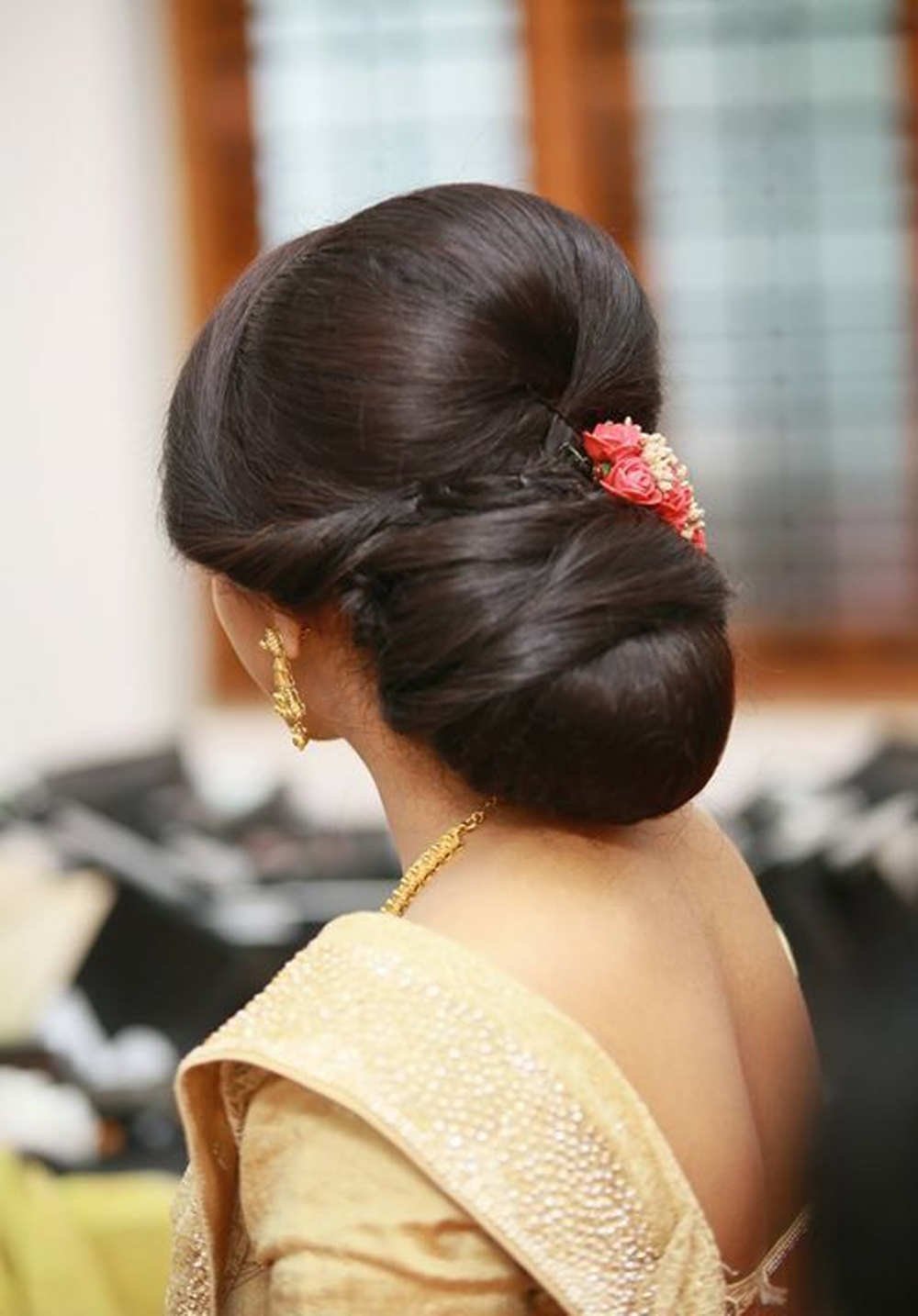
A classic low bun sits sleek and neatly wrapped at the nape of the neck, with every strand smoothed flat for a clean, polished finish. It is the foundation of many traditional South Indian and Hindu bridal looks, and works best for the main wedding ceremony where formality is expected. Pair it with temple jewellery, a maang tikka and a simple bindi for a look that feels complete and culturally grounded. You will need at least shoulder-length hair to pull this off comfortably, and the style holds up well through long, ritual-heavy ceremonies thanks to its compact, secure structure.
Flower Hair Bun
Source:eklavyhairartist
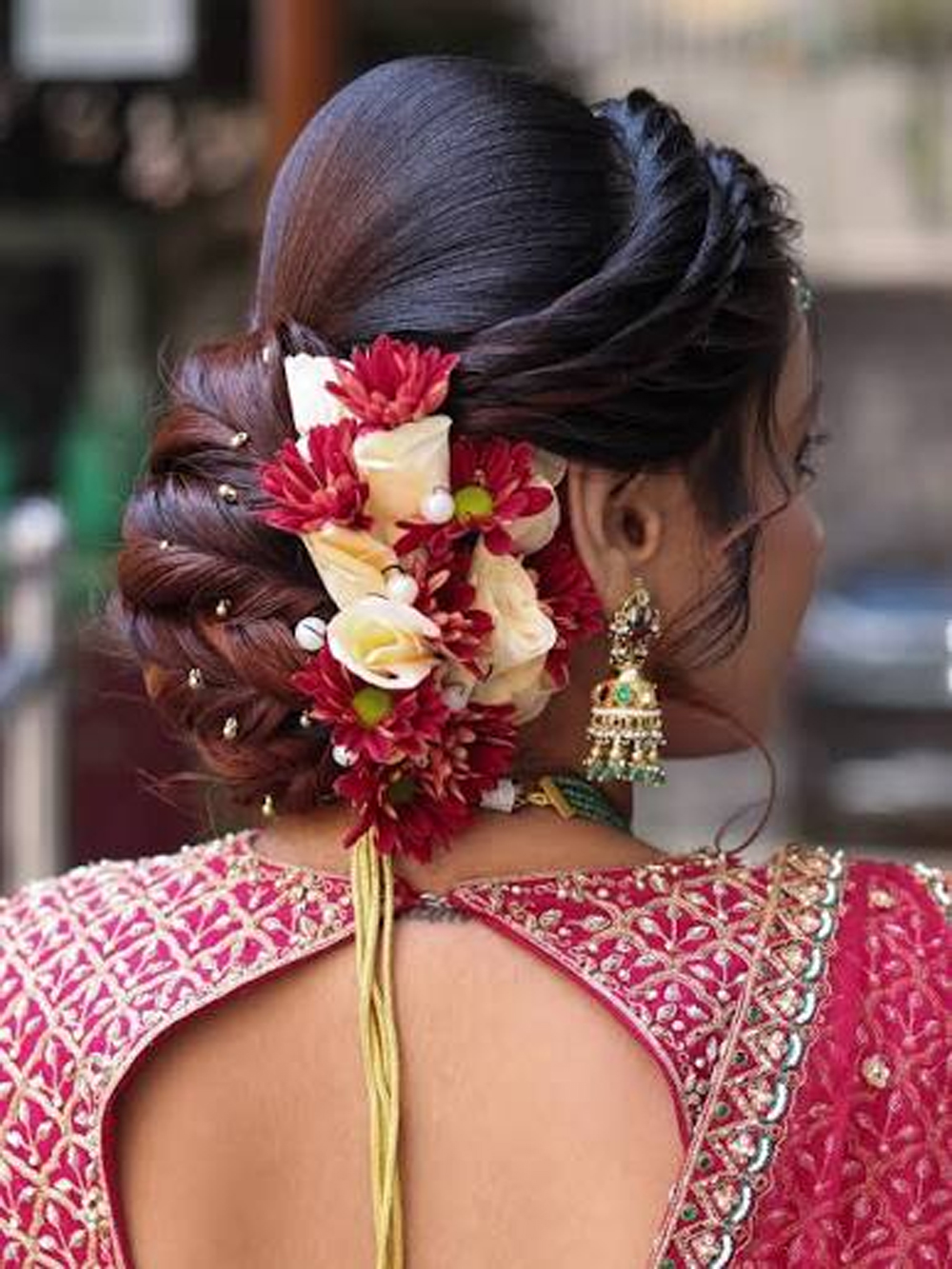
Fresh jasmine or roses are woven directly into and around the bun, creating a fragrant, romantic finish that moves gently as you do. This style is especially popular for South Indian and Kerala bridal looks, and suits the main wedding ceremony or a daytime mehendi beautifully. The florals pair naturally with gold temple jewellery and a gajra, adding layers of texture without feeling overdone. Medium to long hair works best here, and because flowers can wilt over time, this style is better suited to ceremonies that run for a few hours rather than a full day of back-to-back events.
Bejeweled Low Bun
Source: swarikajewels
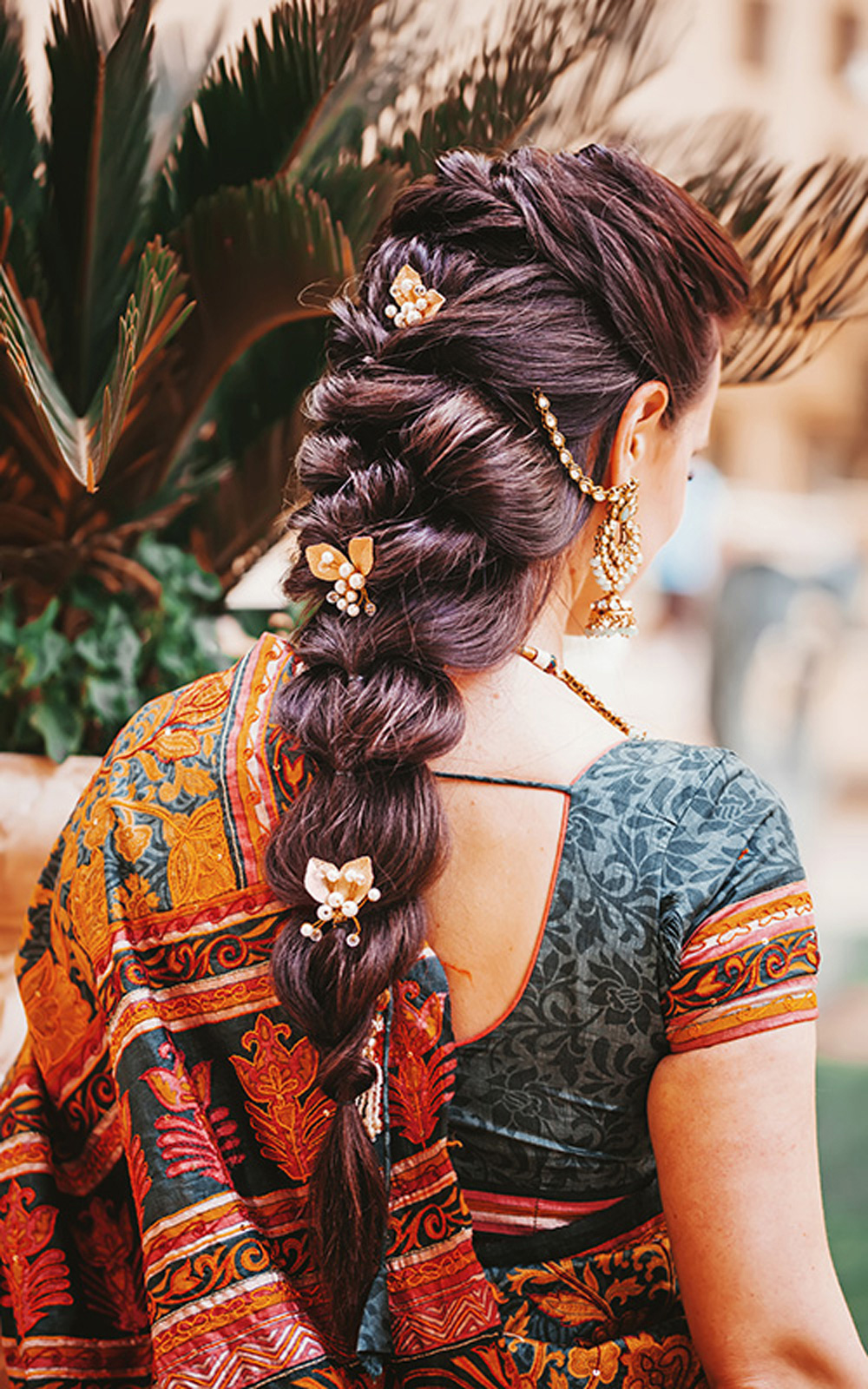
A low bun adorned with pearls, crystals or kundan hairpins scattered across its surface catches the light with every movement, adding quiet glamour to a traditional silhouette. This is a strong choice for the main ceremony or reception, particularly if your outfit is heavily embroidered and you want your hair to feel equally considered without competing for attention. It works with medium to long hair and holds extremely well throughout the day, making it one of the more practical options for brides who need their style to last.
Braided Low Bun
Source: weddingplz
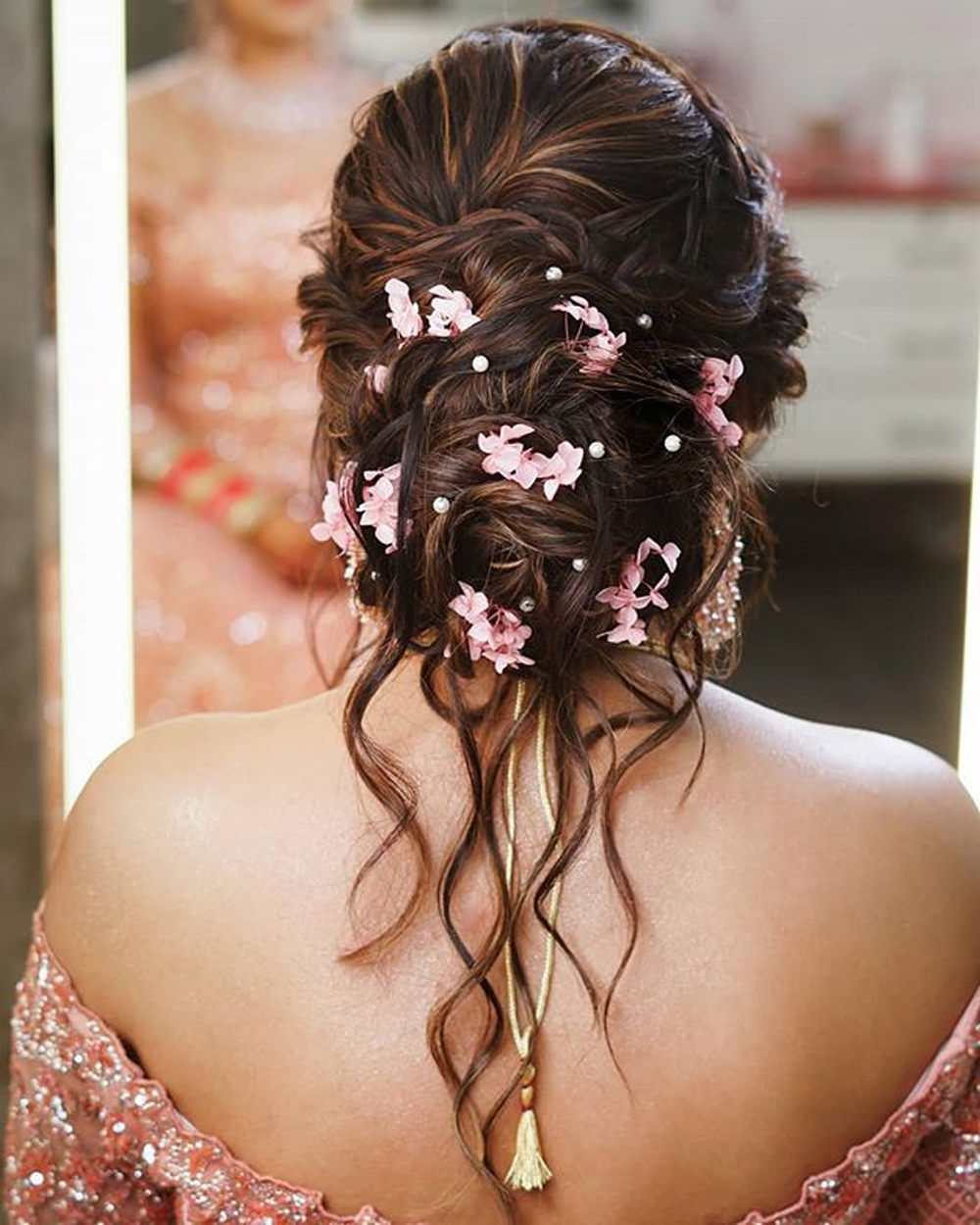
A braid, either a simple three-strand or a more intricate fishtail, is wrapped around the base of the bun or woven through it as an accent, adding texture and visual interest to an otherwise clean silhouette. This style suits the main ceremony or sangeet, and pairs well with delicate hair vines or small floral pins rather than heavier jewellery that might obscure the braid detail. You will need medium to long hair for the braid to read clearly, and the style is durable enough to last through a full evening of celebration.
Half-Up Indian Wedding Hairstyles
Half-up styles offer the best of both worlds, combining the elegance of an updo with the romance of loose, flowing hair.
Romantic Half-Up Hairstyle
Source:Manyavar
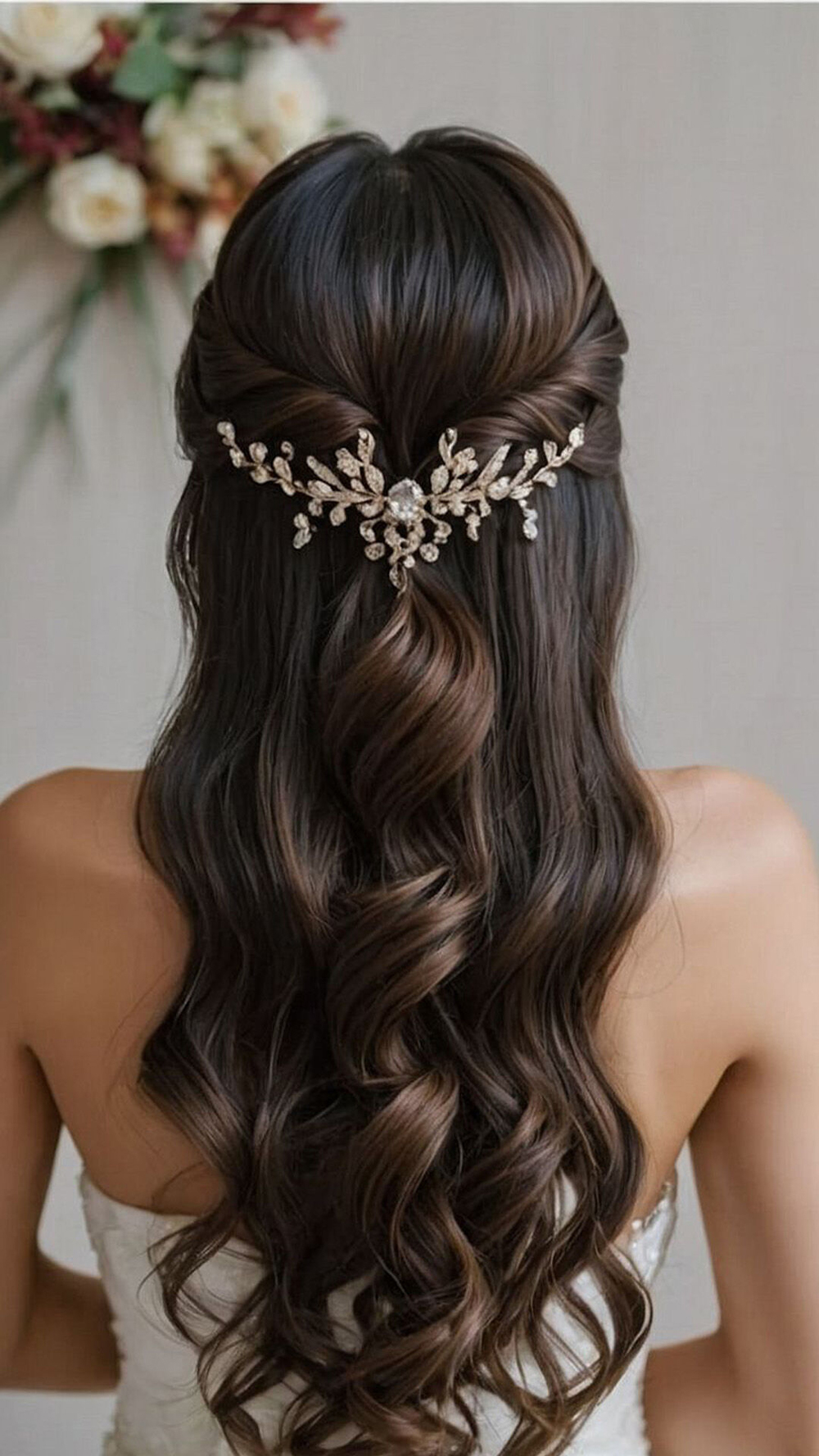
The top section of the hair is gently gathered and pinned at the crown while the rest falls in soft, voluminous curls, ideally medium-sized ringlets rather than tight coils, for a look that feels effortlessly bridal. This style suits daytime ceremonies like the sangeet or a semi-formal reception, and pairs beautifully with a maang tikka, delicate hair pins and a flowy lehenga or saree. Long hair works best to maximise the impact of the curls at the back, and a good setting spray will help the curls hold through hours of dancing and photographs.
Braided Half-Up Style
Source: Wedmegood
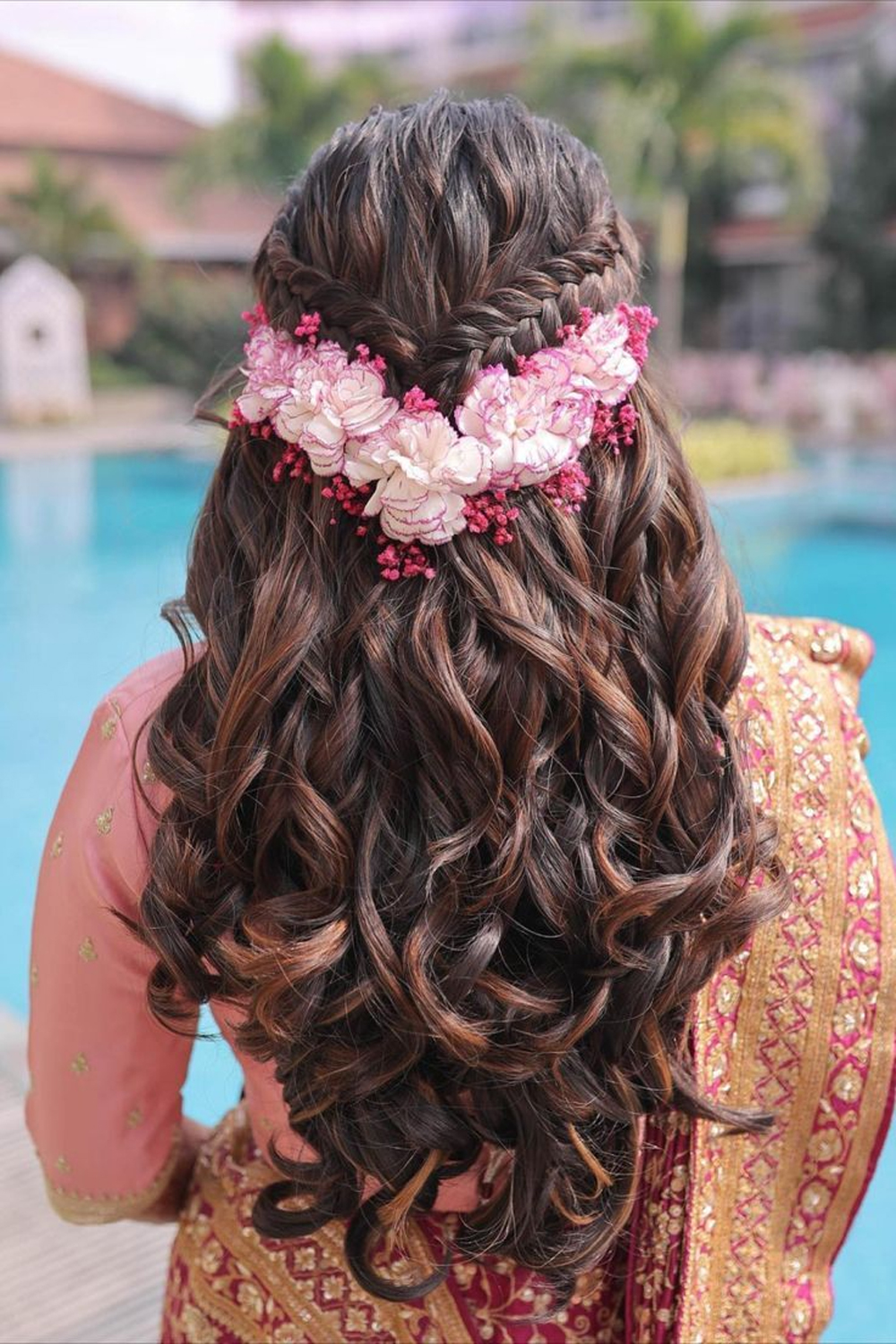
A delicate braid, typically a thin three-strand or Dutch braid, is woven across the top section of the hair and pinned back, while the rest is left loose or lightly waved. It adds a sense of intricacy and care without the commitment of a full braided look, making it a lovely option for the mehendi or sangeet where you want something pretty but not overly formal. Pair it with small floral pins or a simple hair vine, and make sure your hair is at least collar-bone length so the loose section has enough weight to fall naturally.
Bejeweled Half-Up Style
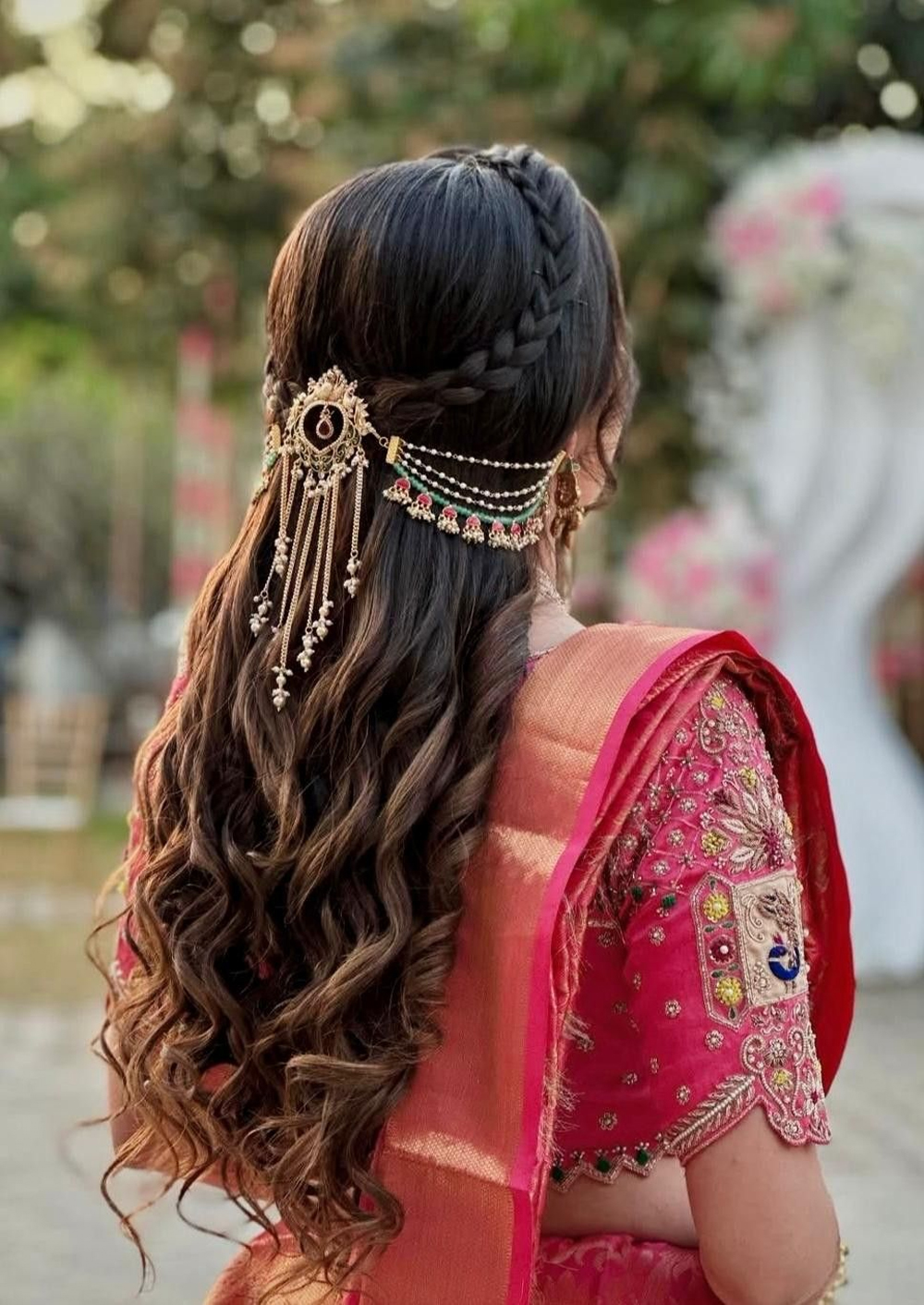
Source:NikunjSevaDham
Similar in structure to the romantic half-up, this version is elevated with jewelled pins, hair vines or kundan accents woven throughout both the pinned section and the loose hair below. The result is a look that feels intentional and bridal without the weight of a full updo, making it a popular choice for the main ceremony or reception. It works with medium to long hair and holds well when pinned securely, though your stylist should use plenty of grip to keep the jewelled pieces from shifting as the evening goes on.
Indian Bridal Braids
Braids bring texture, movement and a touch of bohemian romance to Indian bridal hair, making them a favourite for outdoor and daytime celebrations.
Long Fishtail Braid
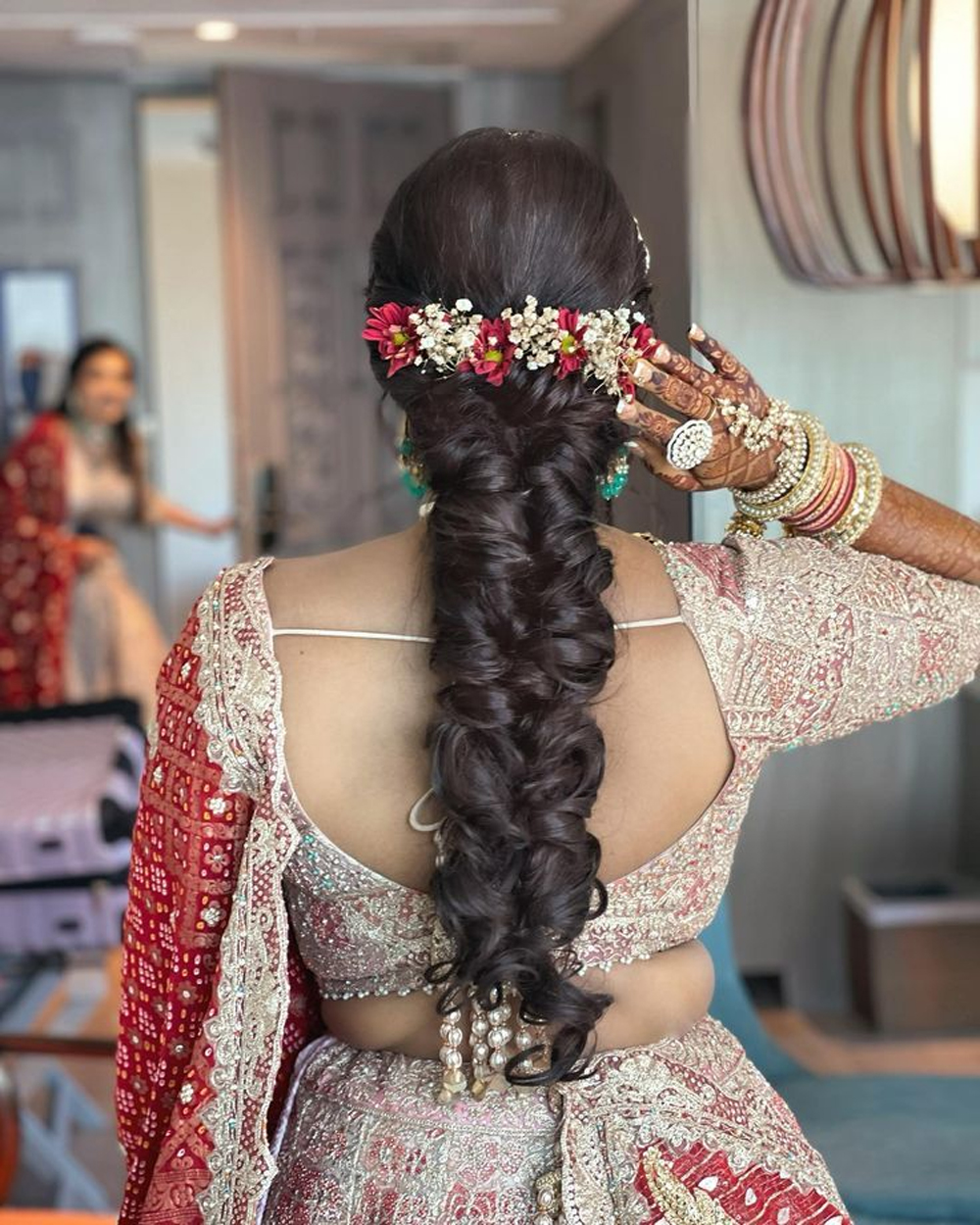
Source:weddingbridge
A fishtail braid, constructed by weaving two sections of hair together in thin, alternating pieces, runs the full length of the back for a look that is intricate up close and elegantly simple from a distance. It suits the mehendi, haldi or an outdoor ceremony beautifully, and pairs well with fresh flowers tucked into the weave or a simple maang tikka at the parting. You will need long hair for the braid to have real impact, and the style is impressively durable, holding its shape through hours of activity without needing much touch-up.
Floral Braid
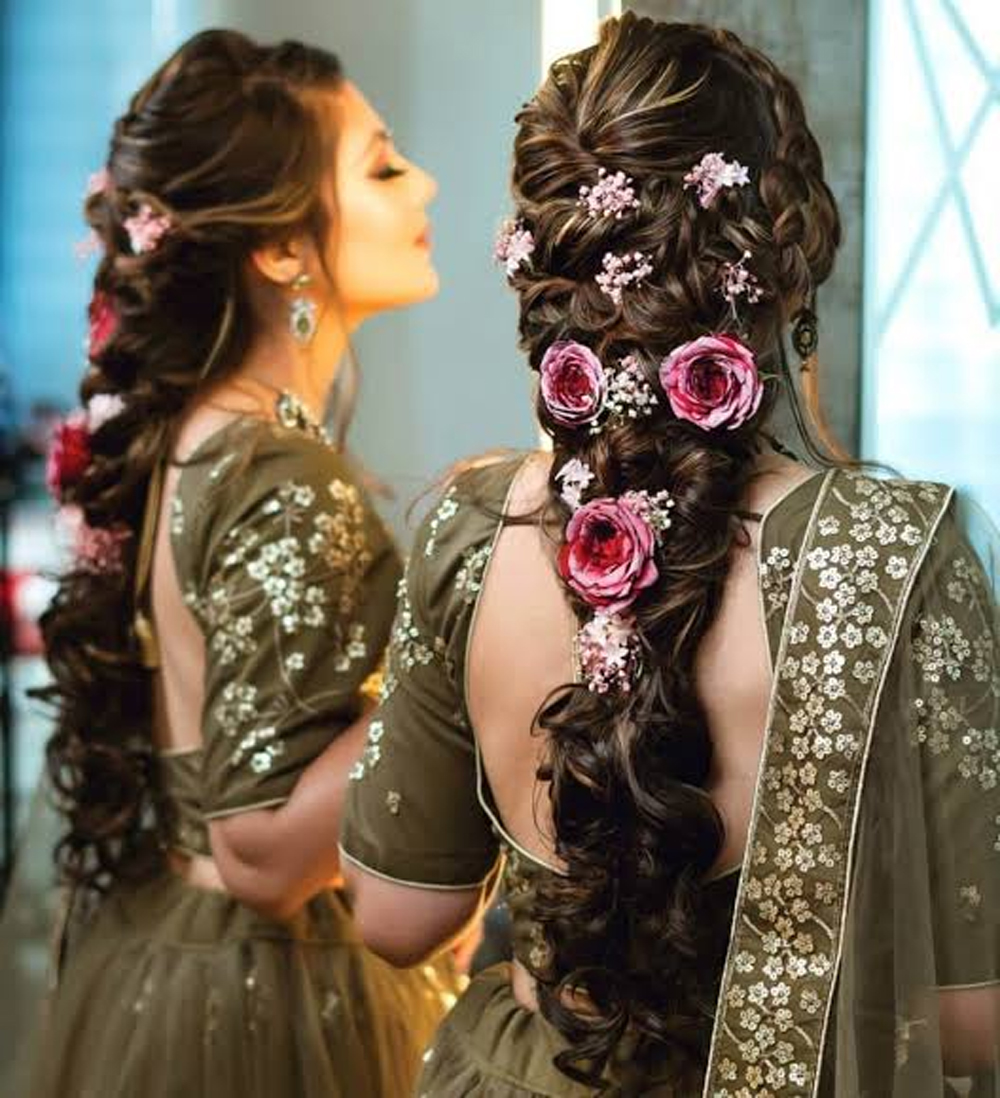
Source:Shaadiwish
Small blooms, typically jasmine, baby roses or marigolds, are woven or pinned along the length of a classic three-strand braid, creating a soft, garden-inspired look that feels festive and romantic in equal measure. This is an ideal choice for the mehendi or haldi, where the mood is joyful and relaxed rather than ceremonially formal. It works best with long hair so the flowers have enough length to make an impression, and because fresh flowers can wilt, it is worth timing this style for shorter daytime events rather than a long evening reception.
Indian Bridal Curls and Waves
For brides who want movement and softness, curls and waves offer a beautifully romantic alternative to more structured styles.
Long Soft Curls
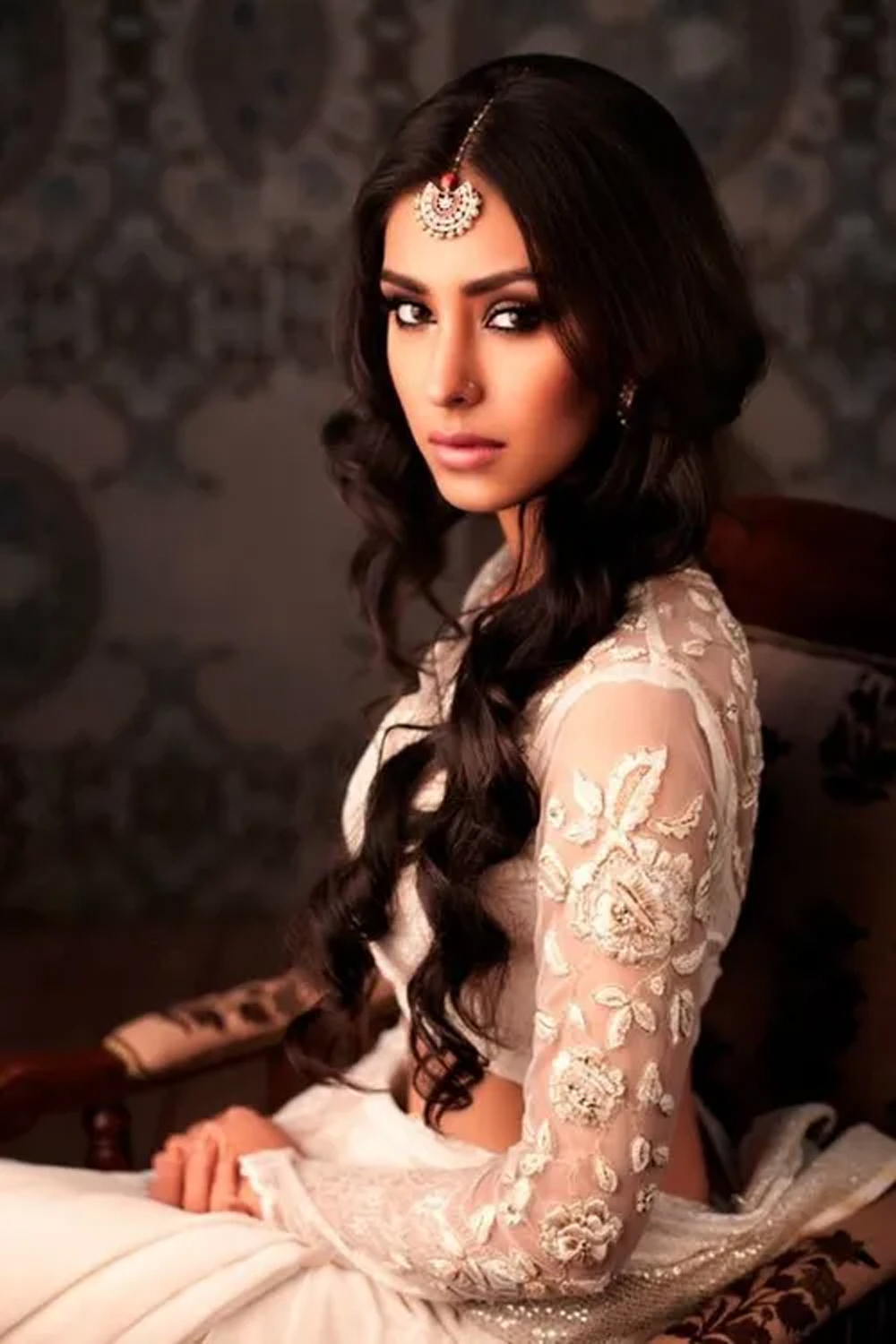
Source: Therighthairstyles
Loose, bouncy curls, think large barrel curls rather than tight spirals, worn fully down create a youthful, romantic look with plenty of movement. This style suits the sangeet or reception particularly well, where a more relaxed, glamorous feel is appropriate, and it pairs naturally with statement earrings and a bold lip since the hair frames rather than competes with the face. You will need long hair for the curls to land at their most dramatic, and a strong hold setting spray applied before and after curling will help them survive a full evening of dancing.
Sideswept Soft Waves
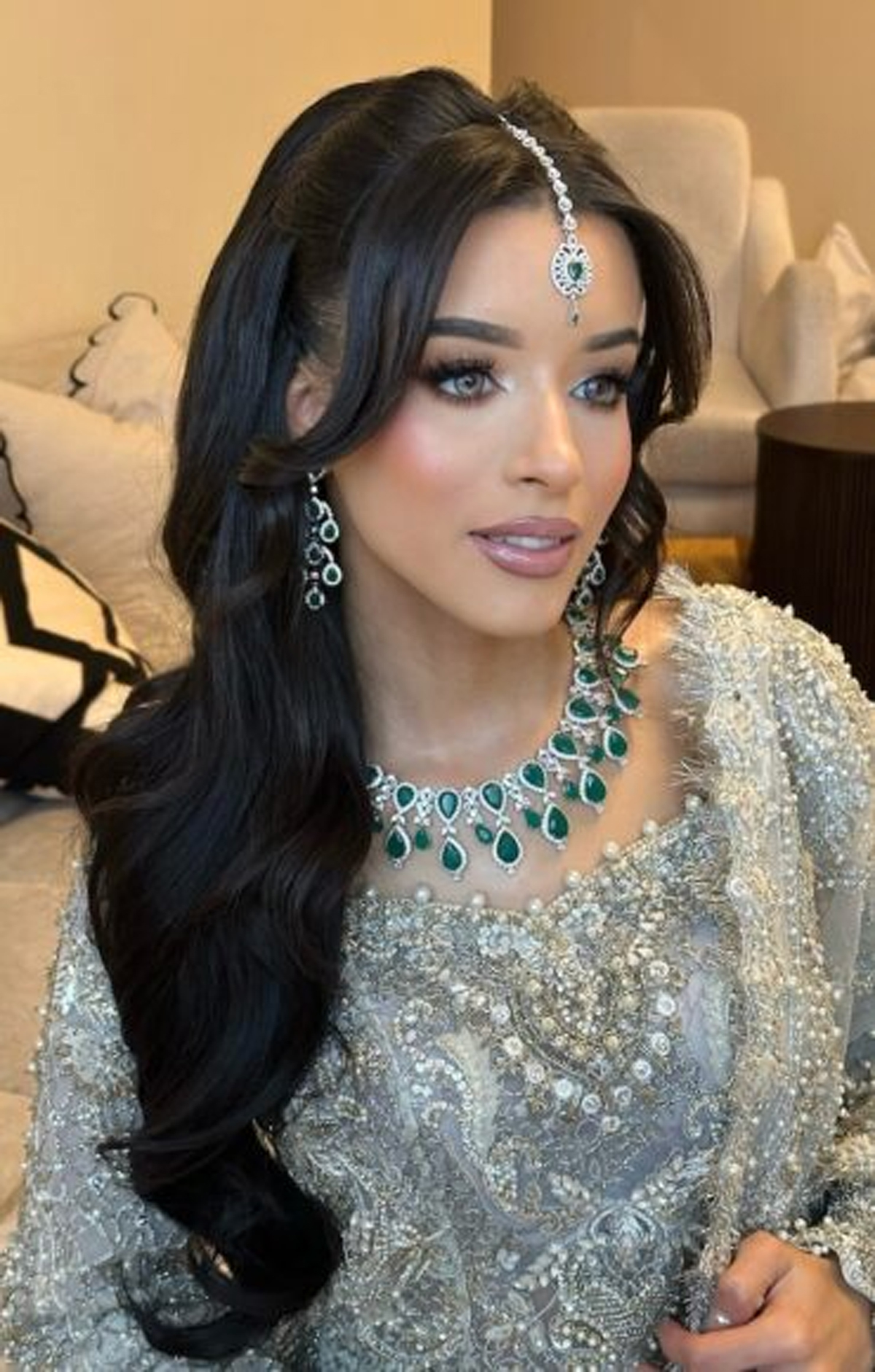
Source:Itakeyou
Gentle, medium-sized waves are swept to one side and pinned loosely behind the ear or over the shoulder, adding a touch of vintage glamour to the overall look. This style works particularly well with off-shoulder or one-sided draped outfits where the neckline is a feature, and suits the reception or sangeet where a more relaxed elegance is the mood. Shoulder-length hair is the minimum needed for this to work well, and a light-hold hairspray keeps the waves in place without making them stiff or unnatural-looking.
Indian Ponytail Wedding Hairstyles
The ponytail has seen a glamorous resurgence in bridal beauty, offering a sleek alternative to the traditional bun.
Low Voluminous Ponytail
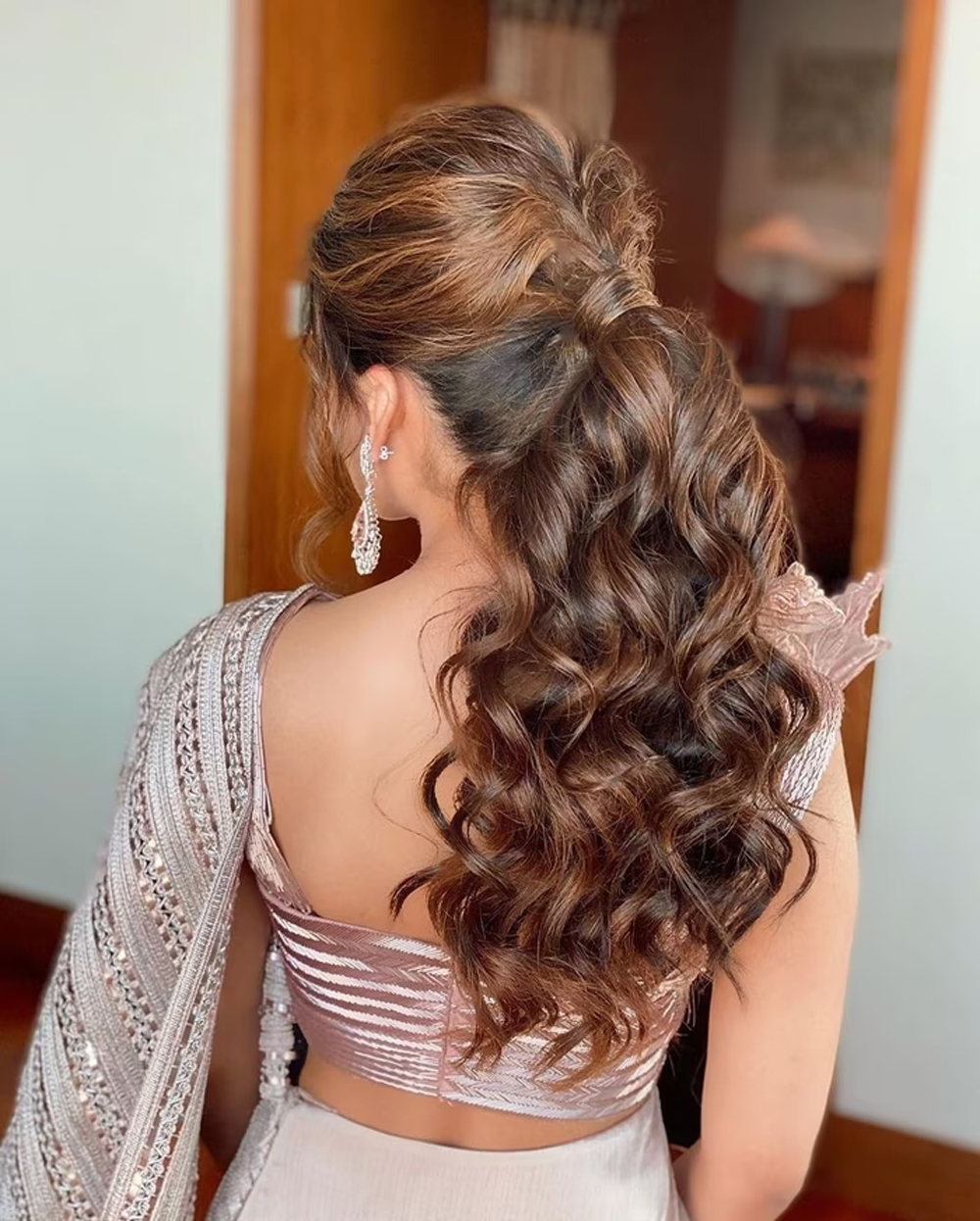
Source:Wedmegood
A sleek, low ponytail with intentional volume built into the crown through backcombing or a volumising product creates a polished, modern bridal look that still feels appropriately formal. It suits the reception or a contemporary sangeet, and pairs well with statement drop earrings and a bold lip since the swept-back style keeps the focus on your face and jewellery.
Medium to long hair works best, and wrapping a small section of hair around the elastic gives the style a cleaner, more considered finish that holds well through a long evening.
Elegant Indian Bridal Updos
For brides who want their hairstyle to feel like a true statement piece, an elegant updo offers structure and sophistication.
Sleek Updo With Volume
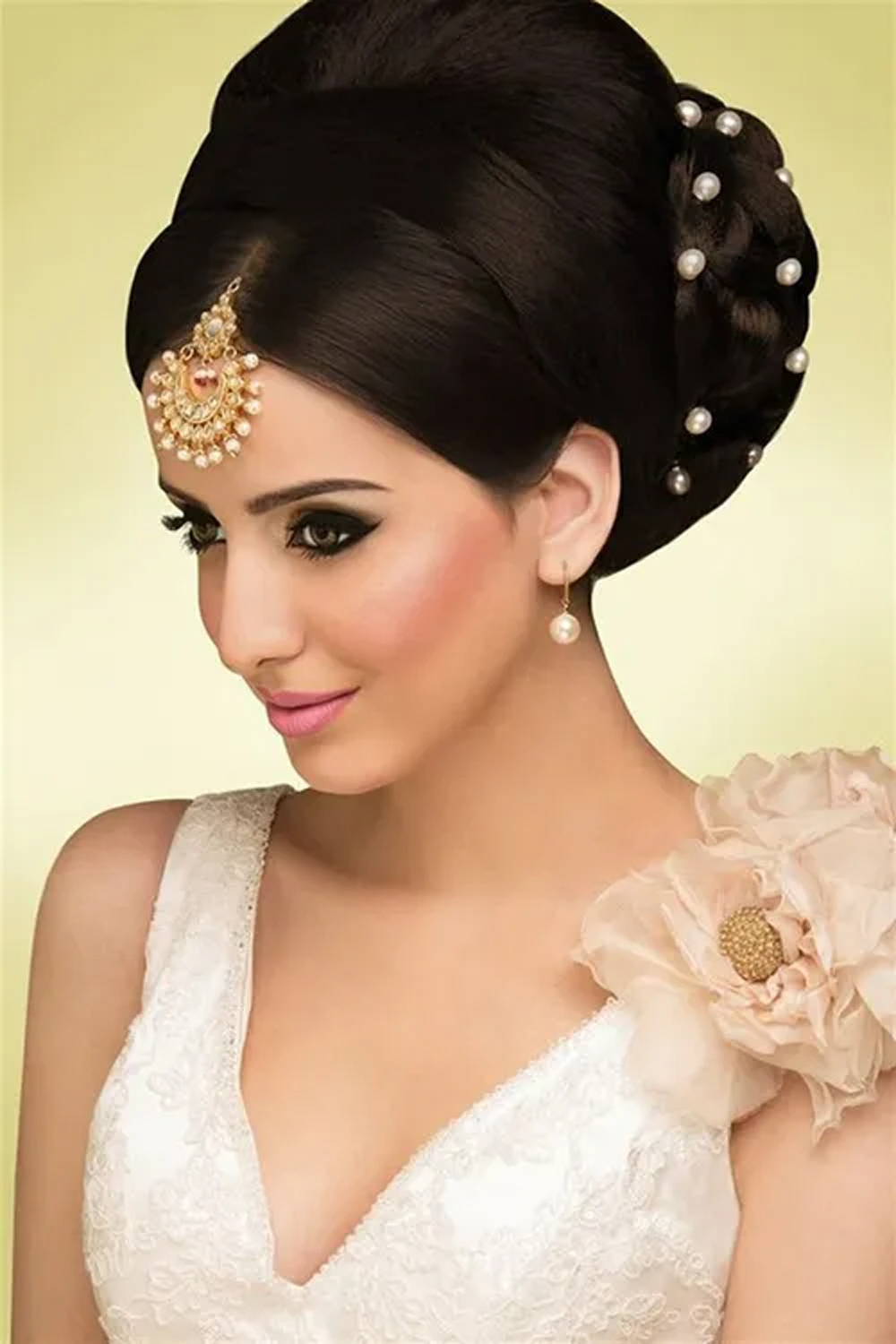
Source:Therighthairstyles
A structured updo with height built at the crown through strategic pinning or a volumising base creates a striking silhouette that photographs beautifully from every angle. This is a strong choice for the reception, particularly when paired with statement chandelier earrings or a heavily embellished outfit where a sleek, elevated hairstyle brings balance. You will need medium to long hair to achieve the volume at the crown without it looking forced, and the style is among the most durable options available, staying firmly in place through hours of dancing and photographs.
Simple Updo With Veil
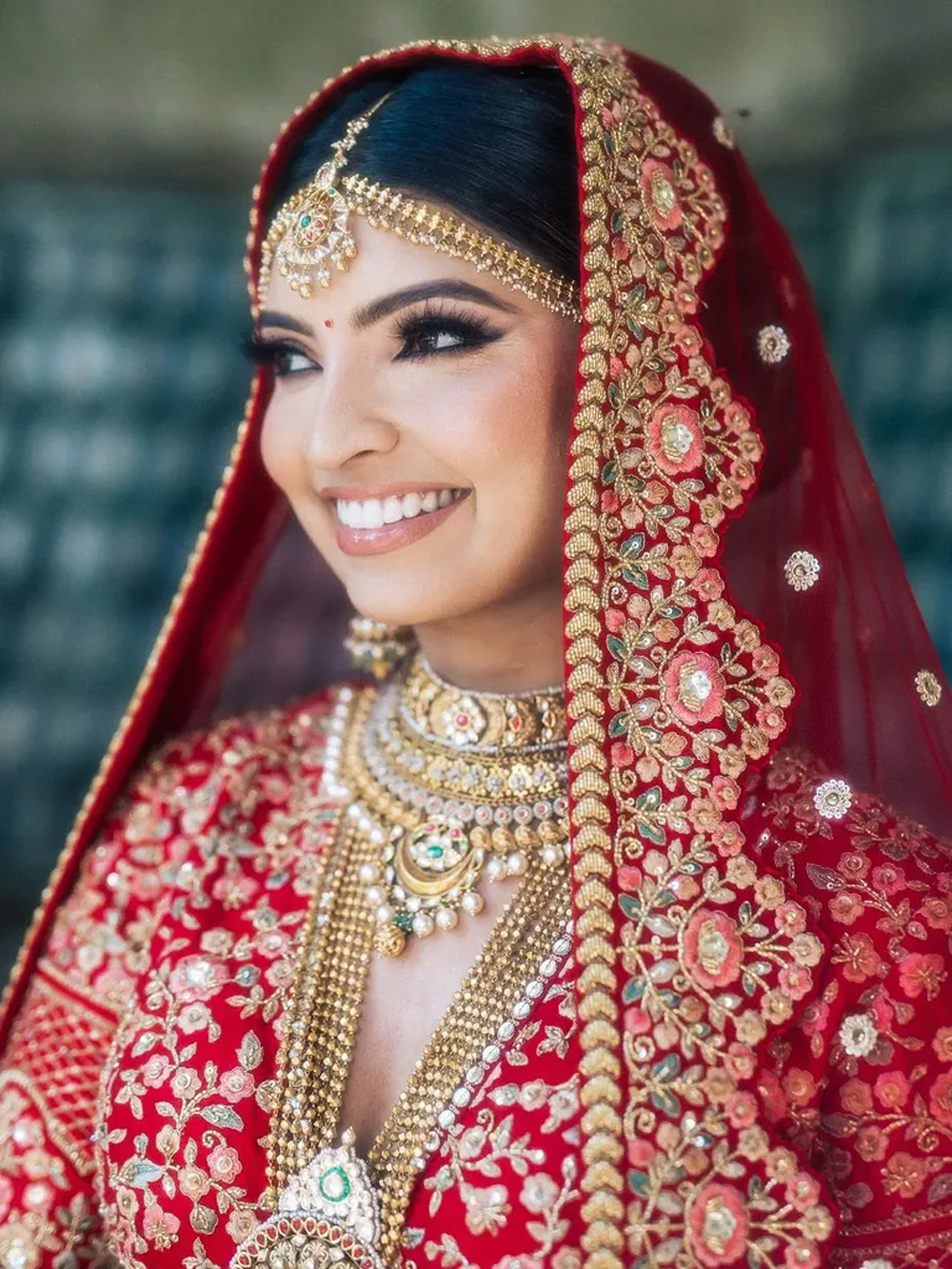
Source: TheKnot
A clean, smooth updo with minimal embellishment provides the perfect base for a veil, allowing it to cascade without competing with an overly intricate hairstyle underneath. This style suits the main wedding ceremony or a reception where you want the veil to be the centrepiece of your bridal look, and pairs best with a simple maang tikka or a few delicate pins rather than heavy hair jewellery. Shoulder-length hair is typically the minimum needed for the updo to sit securely, and your stylist should test the veil placement during your trial to make sure it is fastened in a way that holds comfortably throughout the ceremony.
Trending Indian Bridal Hairstyles
Bridal hair trends are shifting towards styles that feel personal and considered rather than overly polished or rigidly traditional. Textured, undone buns with pieces left loose around the face are replacing the severely sleek styles of previous years, giving brides a softer, more romantic silhouette without sacrificing elegance. Delicate hair vines and minimalist pins are increasingly chosen over heavier jewelled accessories, particularly for brides whose outfits already carry significant embellishment.
There is also a growing preference for mixing traditional and contemporary elements within a single look, such as pairing a modern braided updo with a classic gajra, or wearing a sleek Western-style ponytail with a statement maang tikka. Many brides in Singapore are also using their multiple ceremonies as an opportunity to wear an entirely different hairstyle for each event, treating each function as its own aesthetic moment rather than defaulting to one look throughout. If you are having a haldi, mehendi, main ceremony and reception, there is no reason each one cannot feel distinct and intentional.
Popular Indian Bridal Hair Accessories
Accessories are often what transforms a simple hairstyle into a true bridal statement, and Indian bridal hair offers a particularly rich variety to choose from. Here is a breakdown of the most popular options and how to wear them well.
Fresh Flowers
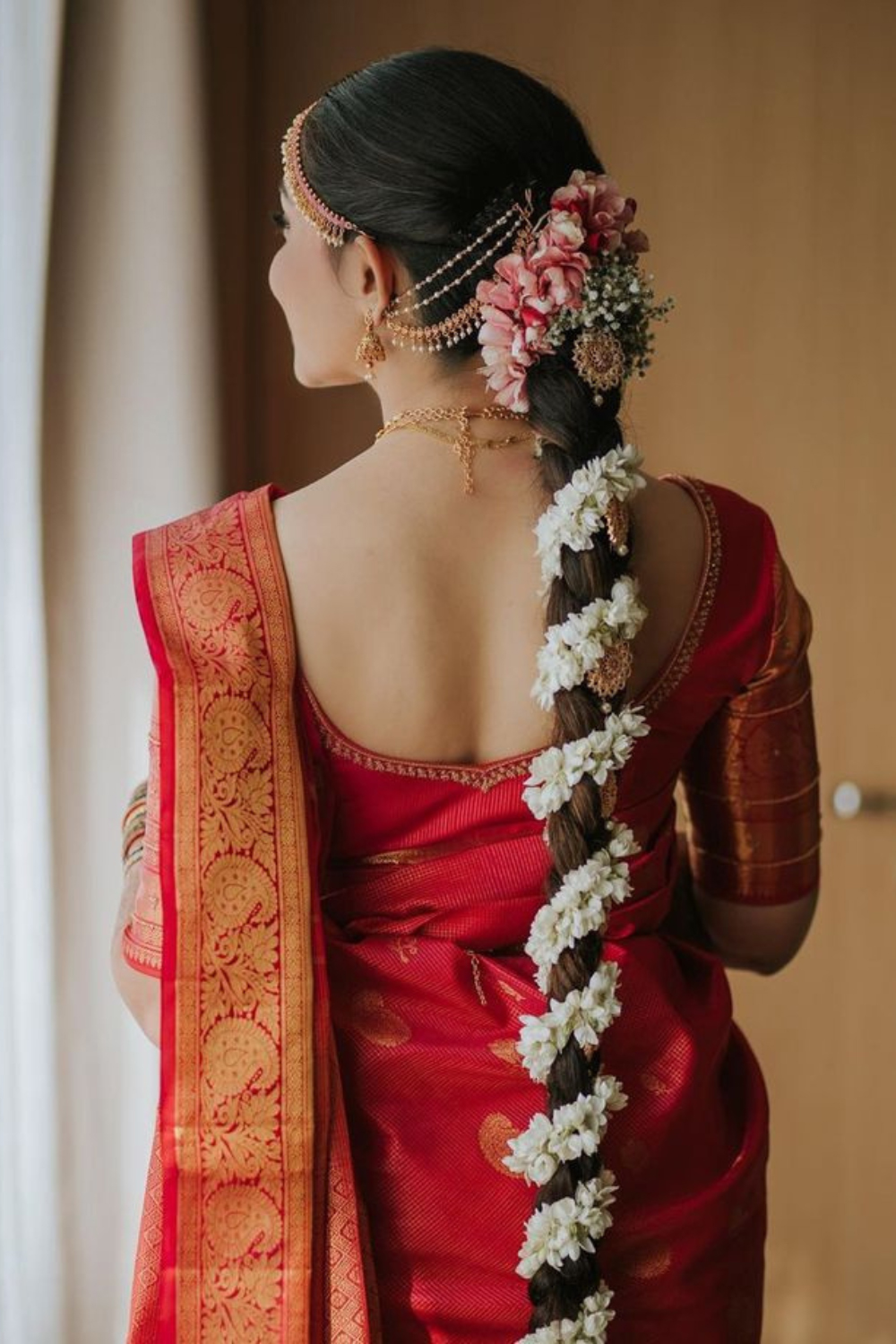
Source:weddingbazaar
Fresh flowers, particularly jasmine, roses and marigolds, are a beloved choice for their fragrance and natural beauty. They work best woven into buns or braids for the main ceremony or a daytime mehendi, but because they wilt with heat and humidity, they are better suited to shorter events rather than a full day of celebrations. If you are getting married in Singapore's climate, ask your florist about hardier blooms that hold up better in the heat.
Gajra
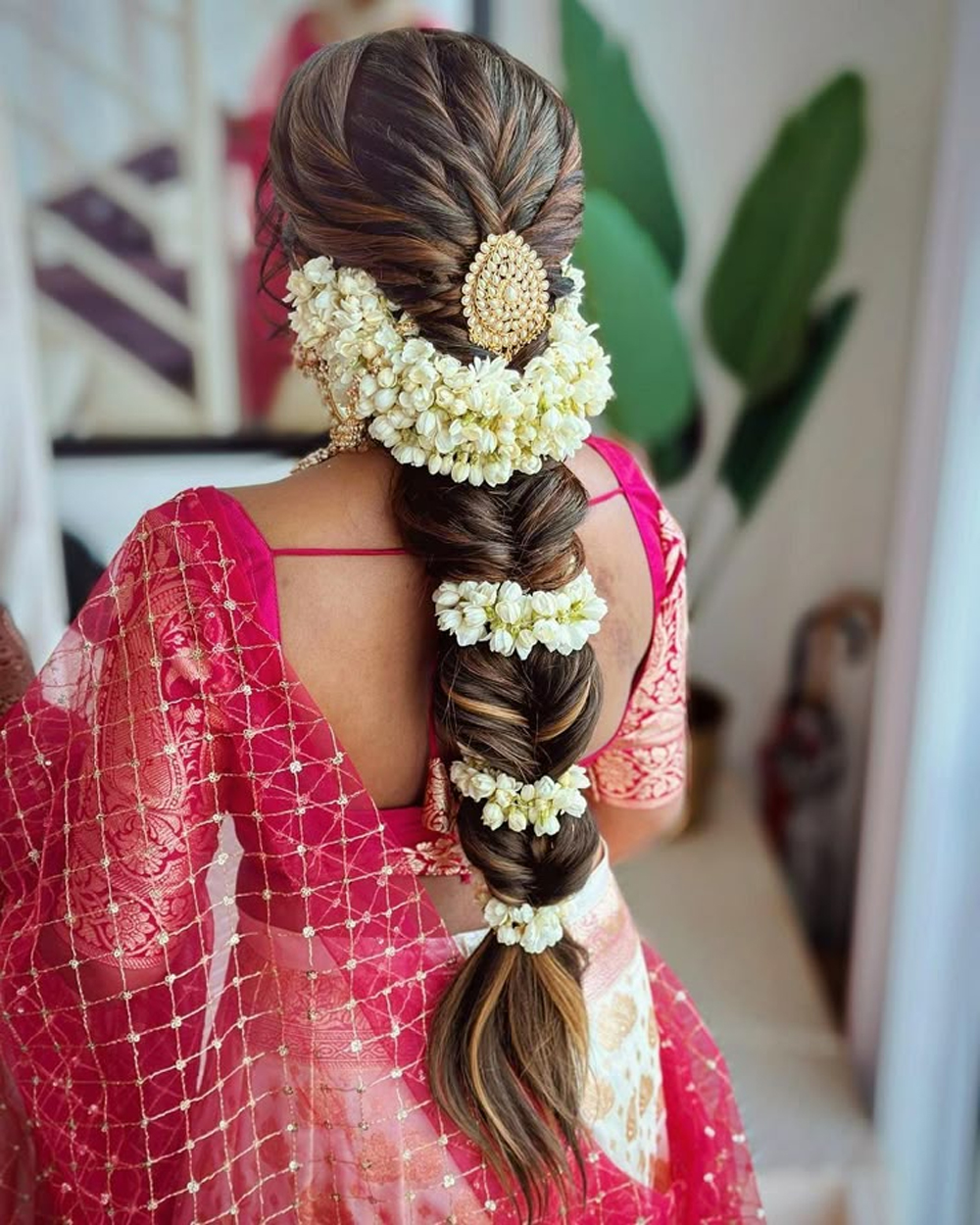
Source: WishNWed
A gajra, a string of jasmine flowers traditionally wrapped around the bun, is a quintessential South Indian bridal accessory that carries both cultural meaning and sensory beauty. It works best with a traditional low bun or braided bun for the main ceremony, and pairs naturally with temple jewellery and a classic saree or pavadai. Like all fresh flowers, it is most practical for ceremonies that are not running through the full heat of the day.
Maang Tikka
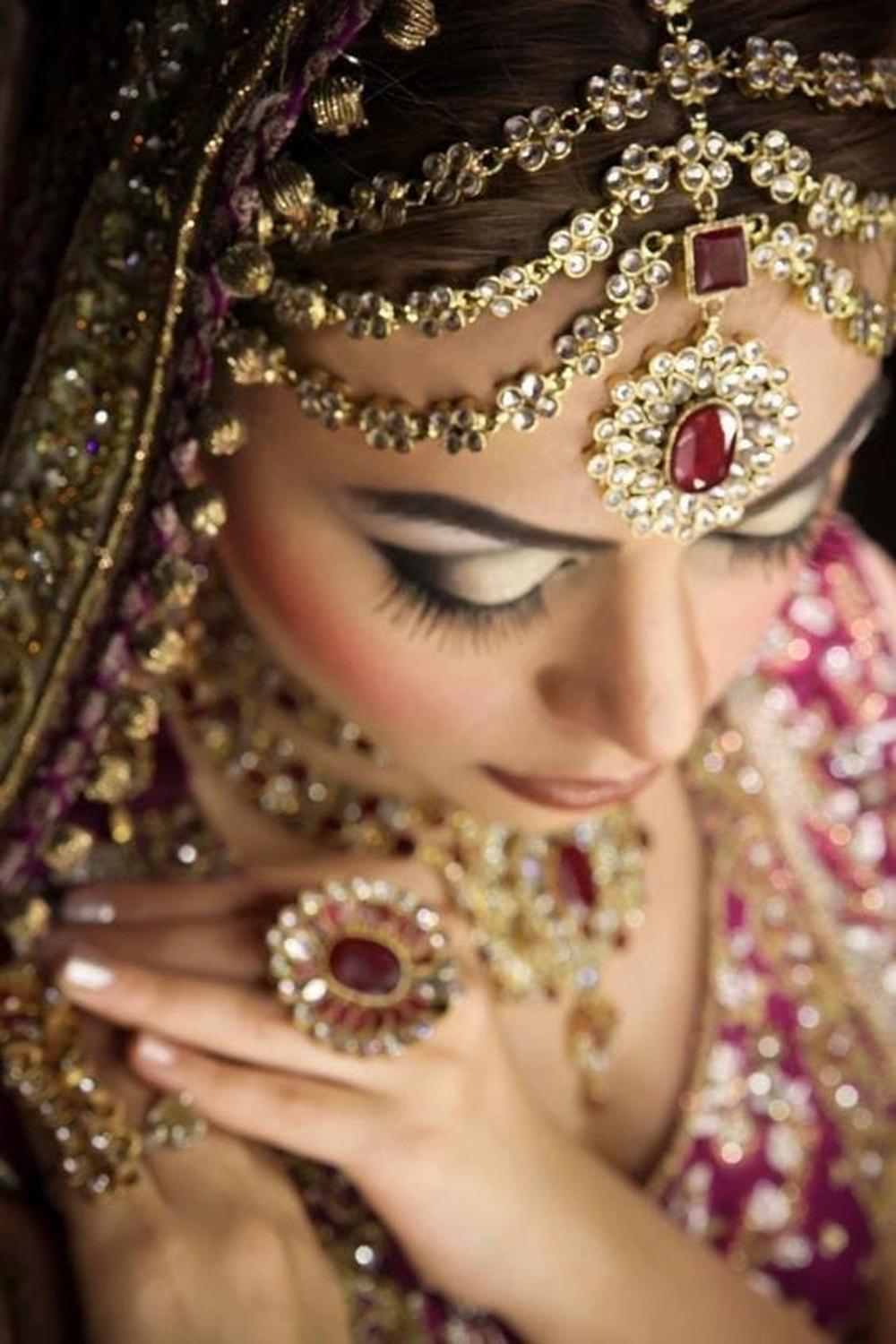
Source: theunstitchd
A maang tikka sits at the centre parting of the hair and drapes a pendant down the forehead, framing your face and drawing attention to your eyes. It is one of the most iconic pieces of Indian bridal jewellery and works with almost every hairstyle, from a sleek low bun to a half-up style or even loose curls. The key is making sure it is secured properly during your trial so it sits flat and does not shift during the ceremony.
Hair Jewellery
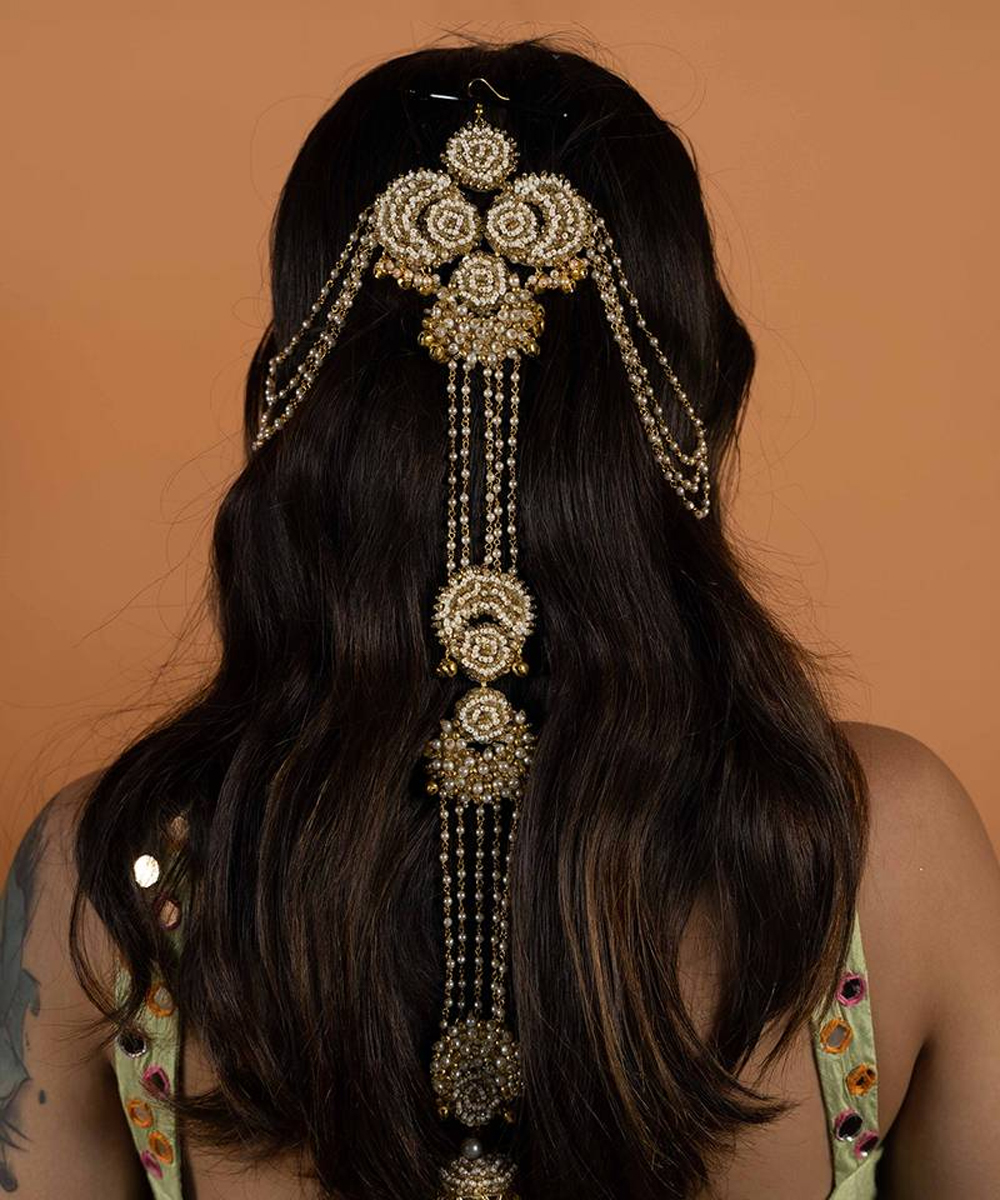
Source:Mirraw
Beyond the maang tikka, hair vines, jewelled pins and kundan accents can be scattered throughout a bun, braid or half-up style to add sparkle and a sense of intention. These work particularly well for receptions or evening ceremonies where the light will catch the stones beautifully. If you are layering multiple pieces, keep the rest of your jewellery slightly more restrained so the overall look stays balanced.
Bridal Veils
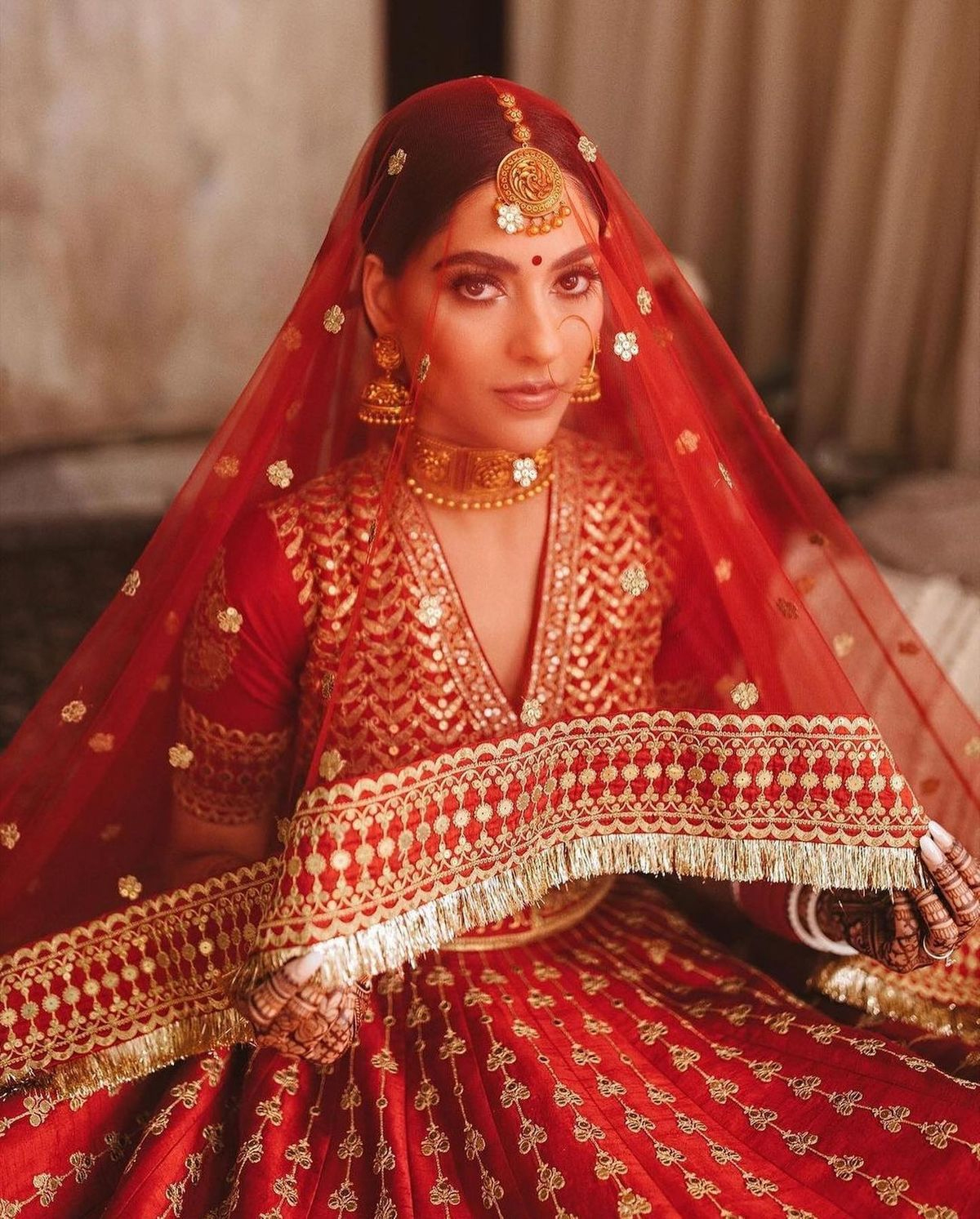
Source: Shaadiwish
Veils are increasingly being incorporated into modern Indian bridal hairstyles, particularly for reception looks where brides want a softer, more romantic touch. They work best over a clean, simple updo or low bun so the veil can drape without competing with an overly intricate hairstyle underneath. If you are planning to wear both a dupatta and a veil across your ceremonies, discuss the logistics with your stylist during your trial so both can be secured in a way that works practically as well as aesthetically.
A Final Note Before Your Big Day
Whatever hairstyle you choose, make sure it feels true to you and practical for the celebrations ahead. Always do a full trial with your hairstylist before the wedding, and bring along your dupatta, veil and any jewellery you plan to wear so you can see exactly how everything sits together. If you are having multiple ceremonies, consider trialling a different style for each one so you walk into every event feeling confident and prepared. Your hair should be the last thing you are thinking about on the day itself.
Request a quote from over 450 wedding vendors
Get A Free Quote Now


Blissful Brides | Wedding Guide 2026
GET THE APP


WE ACCEPT






Copyright © 2026 Citrus Media Pte. Ltd.
Reg No.: 200206092Z. All Rights Reserved